

Jan Bartek – AncientPages.com – Archaeologists have discovered a remarkable Roman-era structure submerged near the Campo di Mare coastline on Italy’s western coast.
The submerged building on the Cerveteri coast, initially discovered in the 1960s, was initially thought to be a fishpond, a structure used for breeding fish. However, recent findings of a column and capital, which were too refined to be associated with a fishpond, have led researchers to reconsider the nature of this structure. As explained in a press release by the Superintendence of Southern Etruria, these new discoveries suggest that the submerged building could be something entirely different from a mere fishpond.
Credit: Soprintendenza Archeologia Belle Arti Paesaggio Etruria Meridionale
Credit: Soprintendenza Archeologia Belle Arti Paesaggio Etruria Meridionale
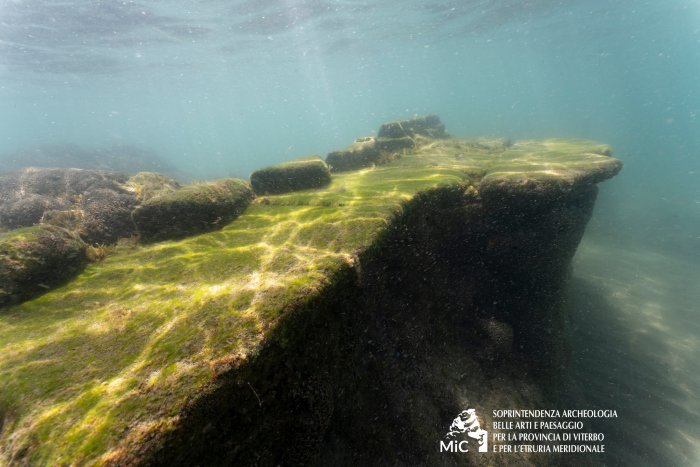
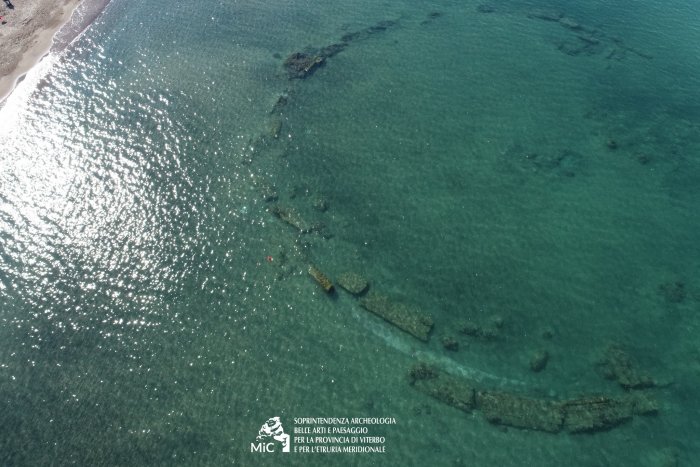
According to experts, the structure is believed to be a maritime pavilion that was part of a larger Roman villa complex. The extent and complexity of this ancient site are yet to be fully uncovered. Still, it offers a fascinating glimpse into the luxurious lifestyles of the Roman aristocracy and the advanced construction techniques employed during that era.
The uncovered Roman pavilion features a unique architectural design with a double belt of brick walls separated by approximately three meters. These walls were founded on a clay layer, preserving the wooden formwork and numerous foundation posts. This exceptional preservation of structural elements provides valuable insights into the building methods and materials used in Roman construction.
Click on settings and caption for English text.
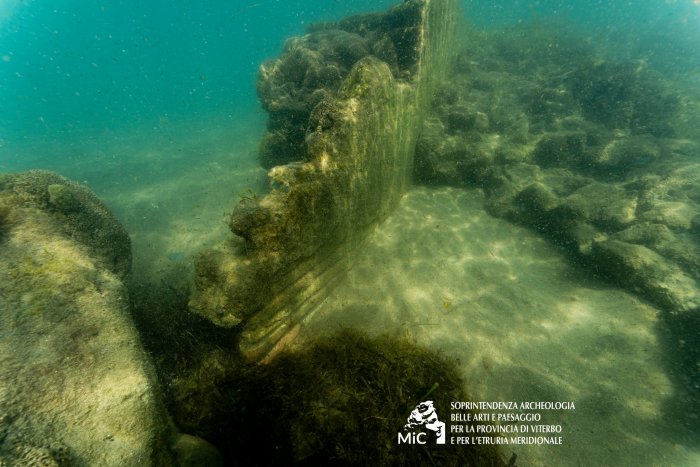
The structure consists of a double ring of brick walls spaced approximately 3 meters apart, with foundations cast into the base clay bank. This clay bank allowed for the preservation of the wooden foundation formwork of the walls, along with numerous driven piles, likely related to a sub-foundation to stabilize the ground.
Credit: Soprintendenza Archeologia Belle Arti Paesaggio Etruria Meridionale
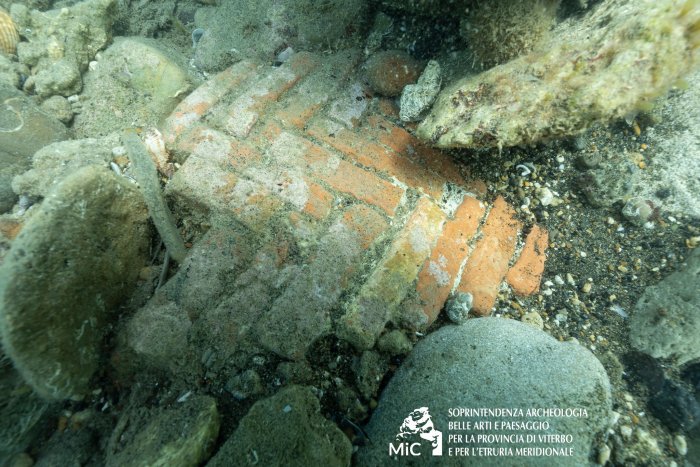
The walls are substantially thick, featuring a double curtain of triangular bricks containing pebbles mixed with mortar, interspersed at regular intervals with bipedal bricks to connect the two wall faces solidly. In some areas, this imposing circular structure is covered in opus signinumin, while portions of the opus spicatum flooring are still preserved in others.
Only in the center, where unfortunately few fragments of masonry not in their original position remain, were fragments of opus flooring found.
Credit: Soprintendenza Archeologia Belle Arti Paesaggio Etruria Meridionale
The extensive use of opus sectile and opus signinum and the presence of opus spicatum reveals the advanced building techniques and refined aesthetic sensibilities prevalent during that era. These architectural elements indicate that the pavilion was an opulent and representative structure within the Roman villa, reflecting the substantial wealth of its occupants. Furthermore, the site’s strategic and prestigious location is reinforced by its proximity to the historic Via Aurelia road, underscoring its significance.
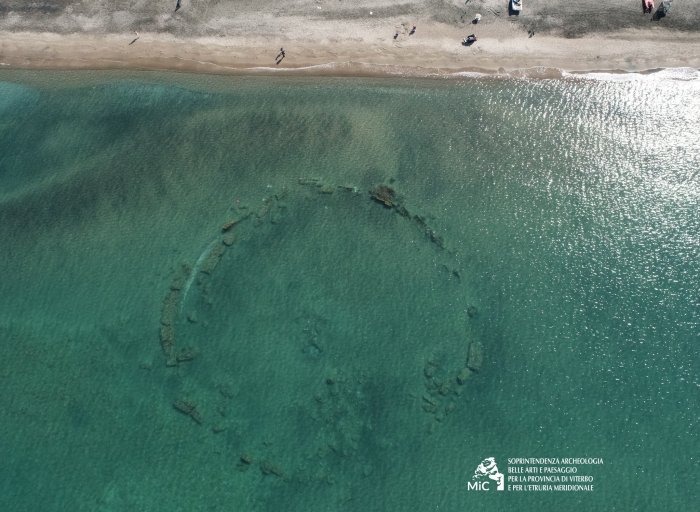
Credit: Soprintendenza Archeologia Belle Arti Paesaggio Etruria Meridionale
This remarkable discovery is part of an extensive three-year program dedicated to excavating and preserving the remnants of ancient Roman architecture submerged beneath the sea over time. In 2021, the area had already yielded a significant find – a Cipollino marble column with its Ionic capital, linked to a circular structure approximately 50 meters in diameter, completely underwater and situated just a few meters from the coastline.
The Underwater Archaeology Service of the Superintendency has spearheaded this project, with the invaluable support of the company CSR Restauro Beni Culturali, responsible for cleaning and restoring the unearthed structures.
See also: More Archaeology News
Looking ahead, future geophysical surveys are planned in collaboration with the National Institute of Geophysics and Volcanology (INGV). These surveys will provide a comprehensive examination of the site, ensuring its protection from the relentless forces of coastal erosion. This initiative underscores the commitment to preserving our rich cultural heritage and unlocking the secrets of the past that lie beneath the waves.
Written by Jan Bartek – AncientPages.com Staff Writer