

Conny Waters – AncientPages.com – Archaeologists working in Quintana Roo, Mexico, have uncovered a previously unknown ancient Maya site concealed within the forest. This pre-Hispanic settlement—named El Jefeciño in recognition of the monumental complex containing around 80 structures—came to light thanks to local residents during the Tren Maya Archaeological Salvage Project, coordinated by archaeologist Manuel Pérez Rivas, on Front 1 of Section 7.
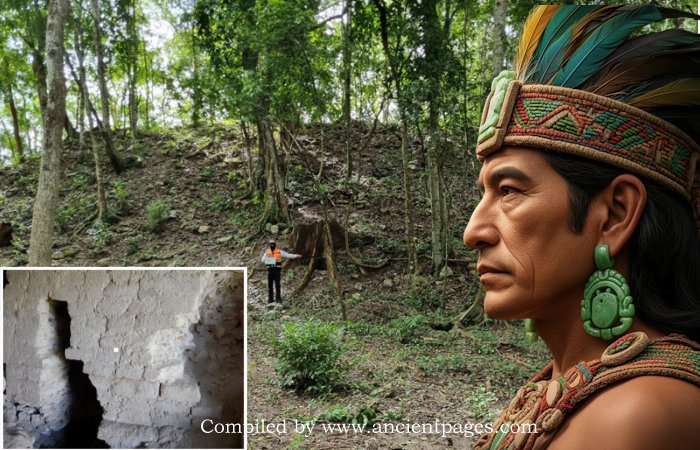
The Secretary of Culture of the Government of Mexico, Claudia Curiel de Icaza, emphasizes that the registration “strengthens the protection of archaeological heritage and expands knowledge about the Mayan presence in southern Quintana Roo. Incorporating this site into the work of INAH also recognizes the value of the communities in safeguarding a historical memory that belongs to everyone.”
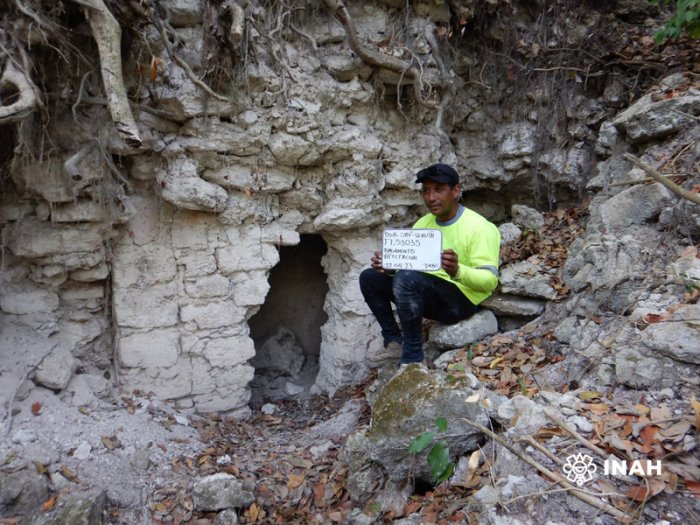
Credit: INAH
Drawing on the architectural features, researchers suggest that the site dates to the Early/Late Classic period (250–900 AD), a time when this distinctive style emerged, marked by large vaulted buildings, rounded and recessed corners, and apron moldings.
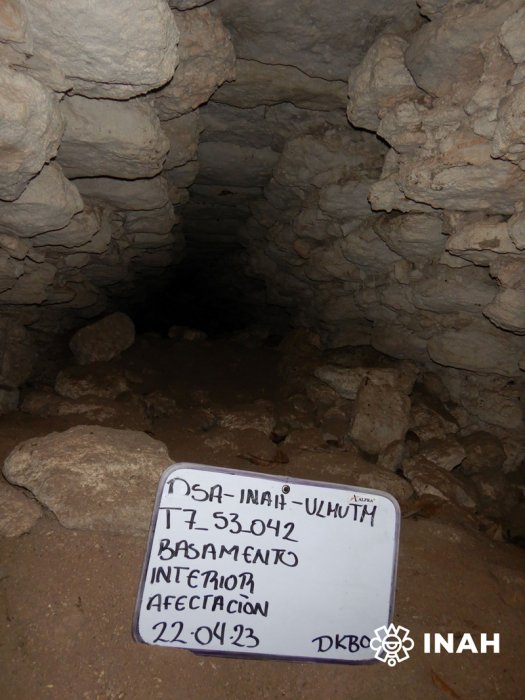
Credit: INAH
Initial findings indicate that El Jefeciño extends across roughly 100 hectares, though its true size may be larger. The archaeologist stresses that more comprehensive exploration will be essential to determine its full extent, the precise dimensions of its buildings, and the overall settlement pattern, among other important characteristics.
“We observed what corresponds to the nuclear area, composed of five buildings between 11 and 14 meters high and 16 to 40 meters long. These monuments are arranged around a C-shaped plaza.”
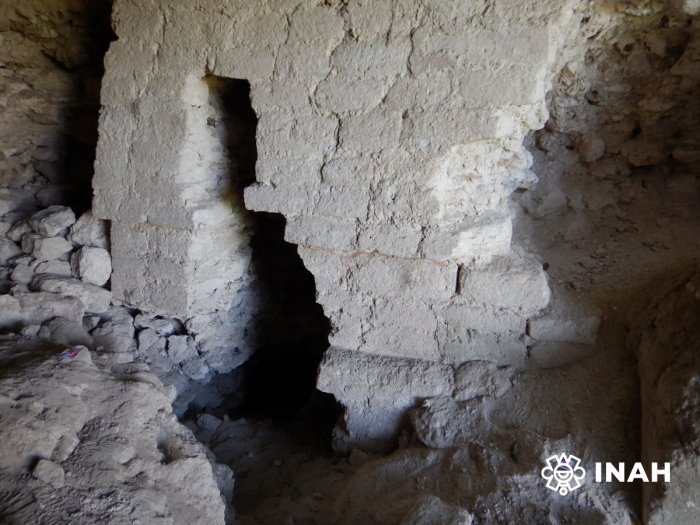
Credit: INAH
In building No. 53035, located in the northeast sector of the property, specialists identified stucco remains with decorative mural painting, as well as fragments of a human skeleton that may belong to a burial context. However, no formal archaeological salvage operation was conducted, so the materials could not be recovered or analyzed in depth and must remain in situ.
Regarding the mural painting, Ojeda González indicated that it appears decorative rather than narrative, featuring white and orange pigments and red stripes. He emphasized that more intensive exploration is needed to confirm these observations.
Credit: INAH
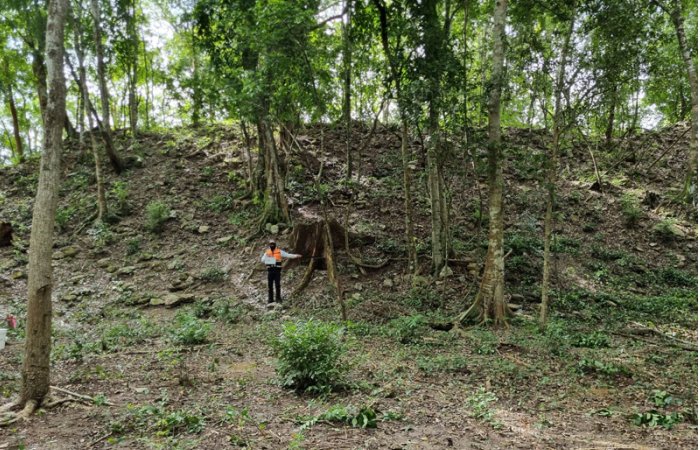
At monument No. 53037, to the northwest of the complex, a substructure with an apron molding is visible. Researchers identified three construction phases at a superficial level: the earliest and deepest (around 8 meters) includes the apron molding; the second is associated with mural-painting remains; and the third shows evidence of structural collapse, with staircase foundations exposed. Based on the scale of these buildings, the archaeologist suggested there were likely at least four or five construction phases.
See also: More Archaeology News
Another important finding is the presence of three Mayan vaults inside some buildings, which are in good condition and project outward from the walls. Looking ahead, the research team plans to undertake a LiDAR mapping project to better define and analyze the settlement pattern. The results will guide recommendations for the site’s conservation, structural consolidation, and future exploration.
Source: INAH
Written by Conny Waters – AncientPages.com Staff Writer