

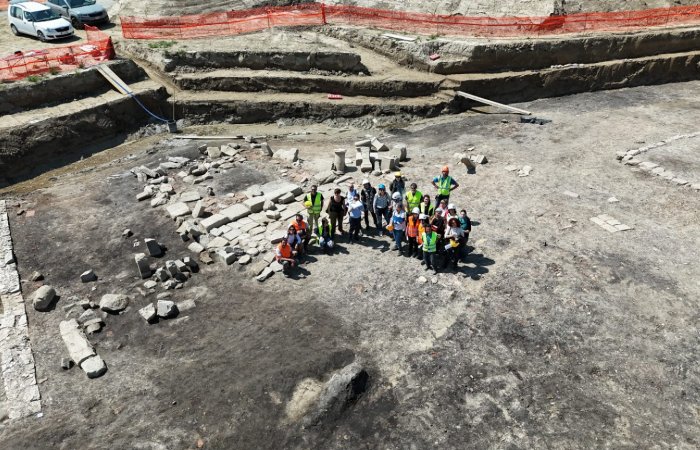
Conny Waters – AncientPages.com – Archaeologists excavating in Ponso, Padua province, Veneto, northeastern Italy, have discovered a large pre-Roman sanctuary and rare ancient inscriptions in the Venetic language.
Credit: Soprintendenza ABAP per le province di Padova, Treviso e Belluno
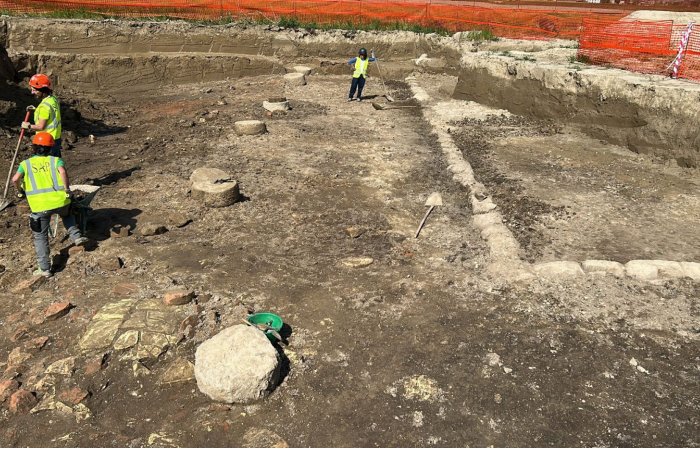
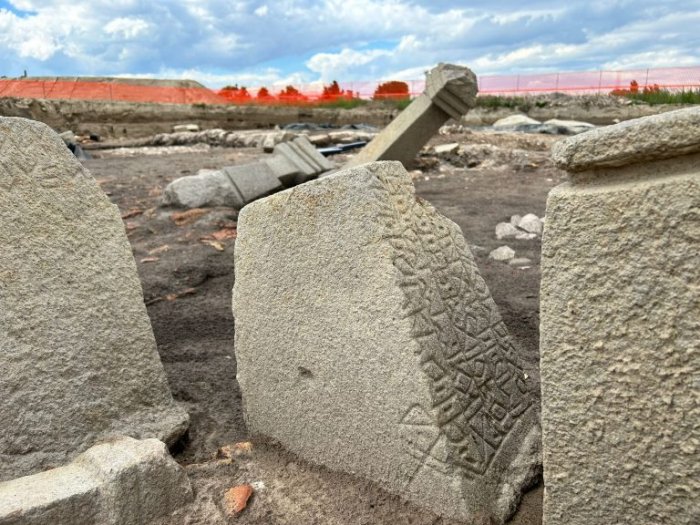
The discovery occurred during construction of the new SR10 “Padana Inferiore” regional road between Borgo Veneto and Carceri. The Italian archaeology team reports the site contains several columns, pavements, and dozens of stone slabs inscribed in both Venetic and Latin. These stones are dated to the 5th and 4th centuries B.C.
Who Were The Veneti People?
This important find provides new insights into the ancient Veneti, an Italic people who lived in northeastern Italy before and during the rise of Rome.
The site is currently under investigation by the ABAP Superintendency for the provinces of Padua, Treviso, and Belluno.
The Veneti people settled in the area around 1000 BC. Their territory stretched south to the Po River and west toward Verona.
Este, which later became the Roman colony of Ateste, was the main Venetic settlement and a religious center dedicated to Reitia, who may have been a goddess of childbirth.
Credit: Soprintendenza ABAP per le province di Padova, Treviso e Belluno
The Venetic language was spoken in northeastern Italy before the Christian era. About 200 short inscriptions in Venetic have been found, dating from the 5th to the 1st century BC. These inscriptions use either Latin letters or a native alphabet based on Etruscan, showing Etruscan influence in the Po Valley from the 6th century BC.
Scholars are still unsure whether Venetic is related to Italic languages like Latin or is a separate branch of Indo-European. The Veneti had friendly relations with Rome and supported them against the Gauls, especially during the war of 225 BC. When Aquileia was founded in 181 BC, it helped protect Venetia from raids by mountain peoples. This ushered in a century of peace and Romanization, during which Roman settlers likely took over much of the land. Towns were given Latin rights in 89 BC and full citizenship in 49 BC.
Venetian religion focused on nature, fertility, water, community protection, and horses. The main deity was Reitia, who was probably the goddess of healing, fertility, writing, and protection, with her main sanctuary in Este. Pora, also known as Reitia Sainate, is mentioned as well, but her role remains debated. Belenus, associated with light and sometimes healing, was found throughout the northern Adriatic and reflects Celtic influence. Some gods were linked to water and important transitions.
Credit: Soprintendenza ABAP per le province di Padova, Treviso e Belluno
The Venetian pantheon is not as clearly defined as the Roman or Greek ones. We know about their religious practices from votive offerings, open-air sanctuaries, dedicatory inscriptions, and local cults, where the sacred was closely linked to the land. Early gods were not always shown as human figures. Instead, they were often seen as spiritual beings tied to natural forces, places, or protective roles. Later, Mediterranean influences led to more human-like depictions.
Sacred Stones Were Reused As Pavement
Under the coordination of Carla Pirazzini, archaeologists from SAP (Società archeologica Srl) began excavations in Ponso. Their initial discovery was a cylindrical stone inscribed in Latin. In the following days, they found additional stones with inscriptions in the Venetic language, spoken by the area’s inhabitants before the Romans arrived. There are about 300 known Venetic inscriptions, dating from the 6th to the 1st century B.C. Finding dozens in one place is remarkable.
Some of the discovered inscriptions extend across multiple sides of the stones. Preliminary translations suggest these are votive requests that include the petitioner’s name, although the names of the gods addressed have not yet been identified.
The remains of an interesting temple surrounded by columns have also been discovered.
Credit: Soprintendenza ABAP per le province di Padova, Treviso e Belluno
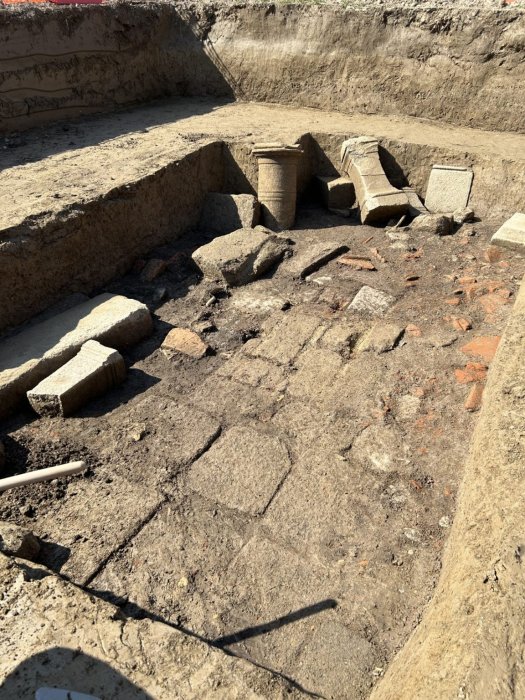
A powerful flood from the nearby Adige River, which once flowed through this area, later covered the sanctuary. Layers of mud, gravel, and sediment buried parts of the site, hiding it for centuries but also helping to preserve its ancient surfaces, stones, and foundations.
For archaeologists, this situation is unusual. Floods usually damage ancient sites, but in Ponso, the flood actually created a protective layer.
Many of the sacred stones were not simply scattered around the site. Instead, they were reused in a paved surface built centuries later. Reusing materials was common in ancient times, as people often included older elements in new buildings. If these artifacts were sacred, using them in the pavement could mean the site was transformed rather than erased.
Early studies show that this pavement was built in the 1st century AD, during the Roman Imperial period. Its purpose is still unclear. It might have been used for ceremonies, as a ritual walkway, or as part of a new large structure at the site.
This site was not just occupied for a short time and then left behind. Archaeologists note that it was used continuously, with changes over time.
See also: More Archaeology News
The first phase belonged to the Venetic people, who left behind votive offerings and practiced local religious rituals. Later, during the Roman period, the site was changed, made more impressive, and possibly given new religious and architectural roles.
This ongoing use is important because it shows that Romanization did not always erase local traditions. Instead, sacred practices were often changed, blended, or given new meanings.
The investigation is still underway. Archaeologists are working to determine when the site was built and renovated, and what cultural practices were associated with each period.
Source: Soprintendenza ABAP per le province di Padova, Treviso e Belluno
Written by Conny Waters – AncientPages.com Staff Writer