

Conny Waters – AncientPages.com – Olympos, an ancient city on the eastern coast of Lycia, is a significant archaeological site. The earliest known written reference to Lycian Olympus is found in Strabo’s Geographica. Quoting Artemidorus of Ephesus, Strabo notes that Olympus was a leading member of the Lycian League, holding three votes in the federal assembly. This status likely persisted until the late second century BC.
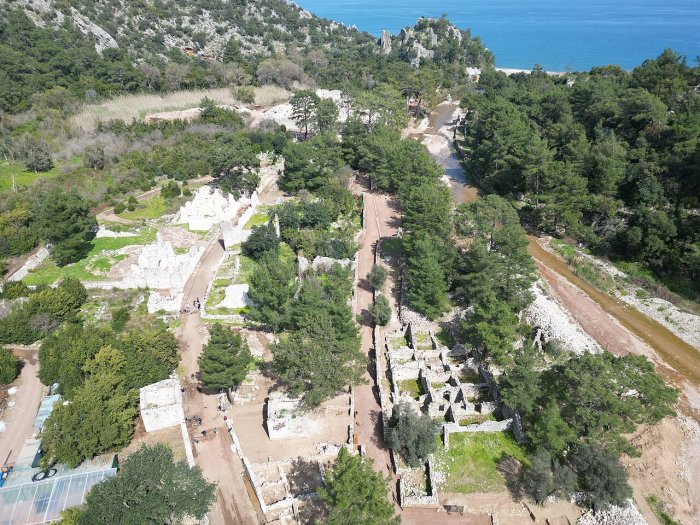
View of Olympos from the west. Credit: Seckinevcim – CC BY-SA 4.0
Ongoing excavations and surveys since 1998 have provided valuable data, enhancing our understanding of Olympos during the Hellenistic, Roman, and Byzantine periods.
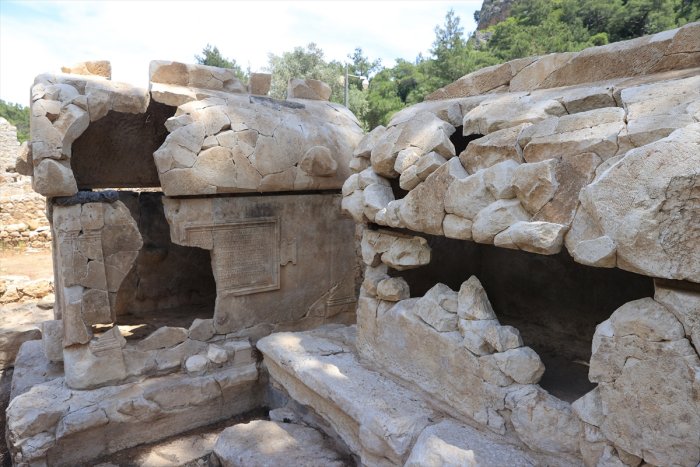
As part of the Ministry of Culture and Tourism’s “Legacy for the Future Project,” archaeologists recently discovered a large tomb in the city’s port district. The 10-meter-high sarcophagus, decorated with hunting scenes and figures of Nike and Eros, is believed to have belonged to an aristocratic woman.
The sarcophagus, found with its lower section damaged, will be opened to the public once archaeologists have carefully reassembled its approximately 50 fragments.
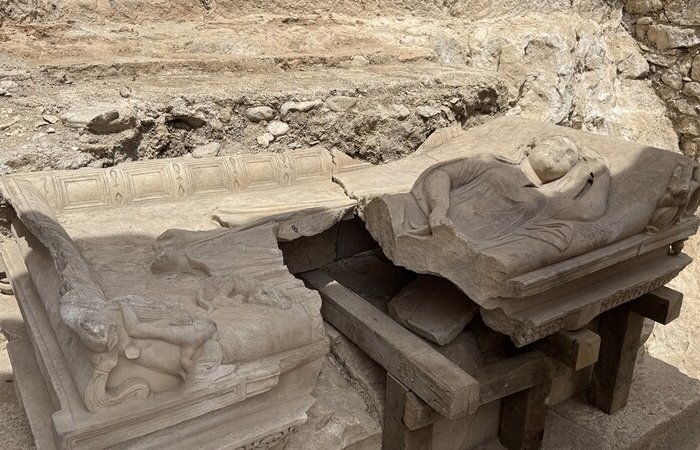
Credit: AA
Associate Professor Gökçen Kurtulus Öztaskin, head of the Olympos Ancient City excavation and faculty member at Pamukkale University, told Anadolu Agency that excavation work continues in the monumental tombs area at the harbor.
Öztaskin explained that the region contains tombs of notable individuals, built side by side with vaulted coverings and sarcophagi inside.
“Two monumental tombs were previously known in Olympos. Through our research, we discovered a third monumental tomb. We conducted detailed studies in the area and found a vaulted tomb approximately 10 meters high, containing a sarcophagus. Although some parts have survived only in a damaged state, we have begun restoration,” Professor Öztaskin said.
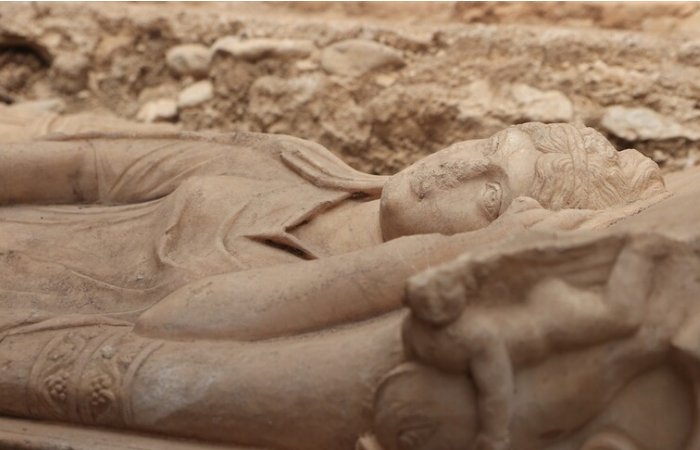
Credit: AA
Öztaskin highlighted the important hunting scene on the sarcophagus. He said, “In the Roman period, hunting scenes symbolized power and wealth. There are also carvings of Nike and Eros, as well as motifs of immortality. The sarcophagus is made from high-quality marble from Iscehisar, Afyonkarahisar. We determined that this tomb belonged to a leading aristocratic and wealthy family of Olympos.”
Each Tomb Contains Stories Unique To Olympos
Öztaskin explained that because the sarcophagi were found in fragments, their restoration is like assembling a “jigsaw puzzle.” He added that repairing and preserving these artifacts is their responsibility.
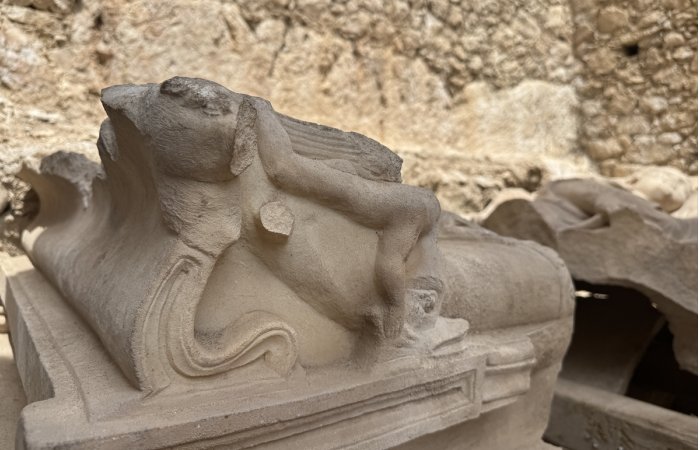
Credit: AA
The Professor noted that the two sarcophagi found last year were in 722 pieces, stating, “We assembled these pieces one by one, placed them accordingly, and began exhibiting them.
Credit: AA
Similarly, this sarcophagus was broken into about 50 pieces. We will assemble and repair it soon before displaying it.”
See also: More Archaeology News
Monumental tombs provide information about the prominent figures of that period, and the tombs in the region belong to people who lived in Olympos and were buried there.
“Burial traditions inform us about past life practices and help tourists connect with the region. These artifacts are important to us and of interest to visitors,” Professor Öztaskin explained.
Source: Anadolu Agency
Written by Conny Waters – AncientPages.com Staff Writer