

Let’s open this review in praise of one of the great female actors of the modern era who never seems to get her flowers – yes, please head to the stage Joan Cusack. A doyenne of the film-stealing supporting turn, often elevating stereotypes such as the daffy aunt or the offbeat schoolteacher, Cusack is a pure Hollywood original with old school comic timing and an appealingly unique timbre to her voice and the way she dryly enunciates her words. Some personal JC highlights include her bemused headmistress in 2003’s School of Rock, earning a laugh every time she utters the words “Mr Schneebly”. She’s also great in small but vital roles alongside her bro John in Say Anything… and Grosse Point Blank, to name a few.
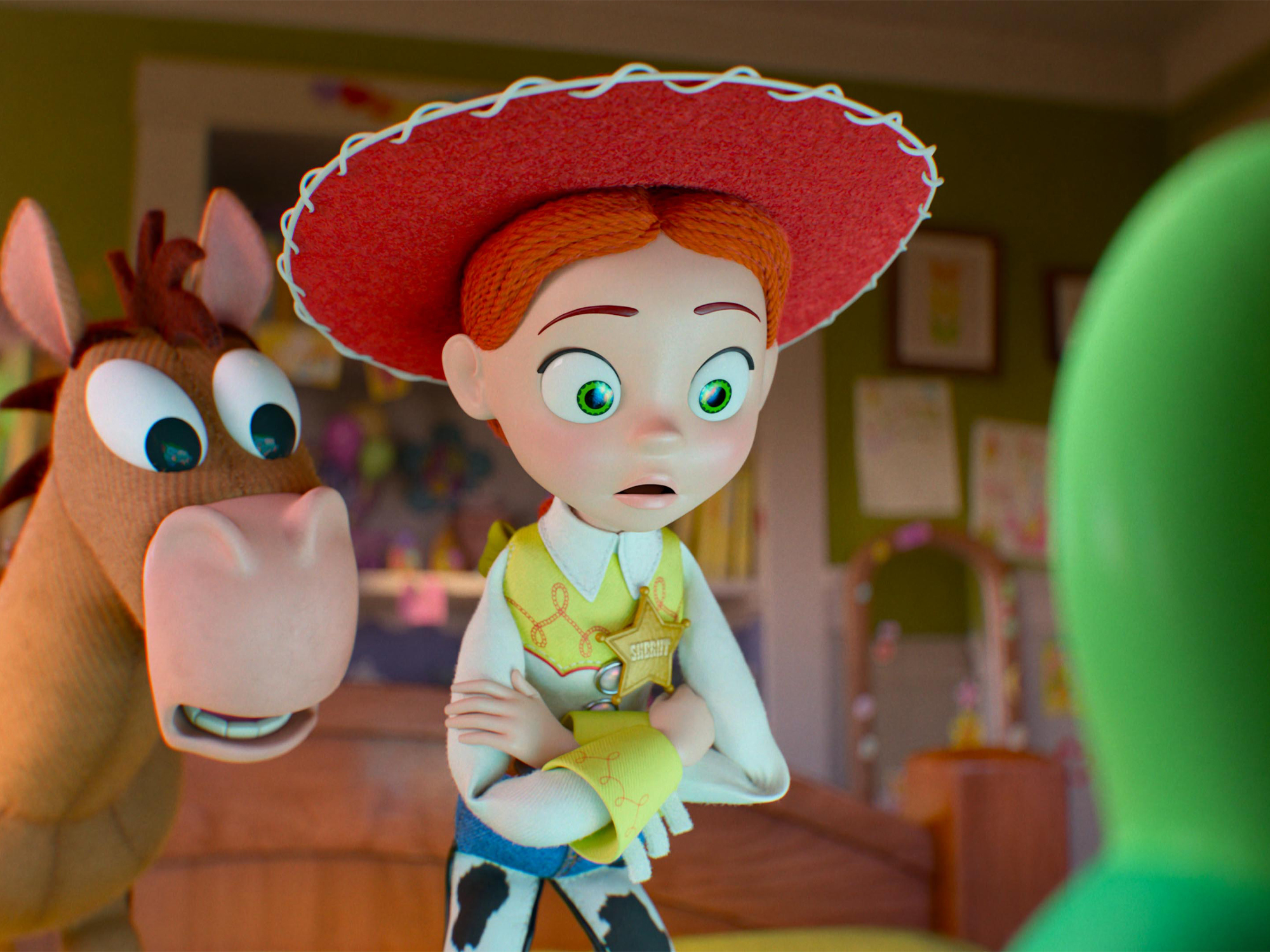
One of the key pleasures of Andrew Stanton’s Toy Story 5 is that Cusack is given the starring role as shit-kicking cowgirl Jessie who, in this film, is finally allowed to step out from the shadows as merely a sassy female analogue to Tom Hanks’ goofy deputy, Woody. Her emotional arc is at once intense and surprising, and it’s through Cusack’s immaculate voice work that much of the film’s core message – regarding the value of physical possessions beyond simple material enjoyment – hits home. The Toy Story franchise has made something of a reputation for itself as being willing to delve beyond the surface level nostalgia of children’s toys to explore how these colourful totems shape us as people, and in this film, we get a novel, and deeply moving iteration of that core quest. Even though we can’t see her, Cusack’s big scene – of the type she’s rarely afforded in her live action roles – lands with an atom bomb impact and singularly justifies the film’s existence.
Get more Little White Lies
At the centre of the story is something a little more prosaic and inevitable, as the saga turns its crosshairs to the rise of screens, smartphones and tablets, framing them as obvious harbingers of doom when it comes to pre-teen creativity and character building. Little Bonnie still loves playing imaginative games with her toys, but her peers are all locked in to tablet screens leaving her all alone in her eccentric endeavours. Crumbling to corporate pressure and honest-to-goodness lazy parenting, Bonnie’s folks decide to buy her a Lilypad, a gaming and social media tablet voiced by Greta Lee that quickly consumes the kid’s world. The rest of the toys, Woody, Buzz (Tim Allen) et al see Lilypad as a threat to their existence, and they’re also worried that her competitive games and colourful outlets for techno bullying are sending a clearly-addicted Bonnie into a depressive funk.
It’s a set-up that’s not entirely believable, and you feel the filmmakers have perhaps manufactured an issue to fulfil their dramatic ends (“screen time” is mentioned but never seems to actually apply). And in the name of diplomacy, the film doesn’t push Lilypad too hard as its antagonist, the suggestion being that our good friends who foist tablets on children are doing some good work in the space of education and sociability. But the film comes into its own when we peel away with Jessie to an out-of-town ranch where the toy-loving Blaze (Mykal-Michelle Harris) lives, but which also happens to be the home of Jessie’s previous, beloved owner. The film then pivots to being less about the pros and cons of certain toys, and about the toys’ strained efforts to get the like-minded Bonnie and Blaze not only to meet, but to realise that they could feed off of each other’s inherent humour and ability to whisk up worlds from their imaginations.
In terms of the basics, the gag hit rate is solid if unexceptional, the animation has that patented Pixar sheen, and most of the ensemble get their little moment to shine. To be honest, the first half of the film is a little scattershot, and it’s hard to know what the filmmakers are actually driving at in terms of a thesis (or, indeed, ample justification for a 5th run-out). Yet when Jessie’s big scene arrives, everything appears to naturally coalesce and it’s plain sailing from there on in. If anything, Toy Story 5 actually proves that the series is marked by its moments of quiet introspection, and that were a 6th film given the green light, that it wouldn’t be such a bad thing to finally chuck Forky in the bin and opt for a less-is-more approach to these beloved, existential adventures.