

Jan Bartek – AncientPages.com – In ancient societies, women’s high social status was often reflected in their funerary costumes, especially their headgear.
Archaeologists have found several female burials from the early 6th century BC in forest-steppe Scythia, each with funerary headdresses adorned with corata, a type of headdress featured at the Bilsk hillfort, a large settlement in the Left-Bank Dnipro forest-steppe of Poltava, Ukraine, adding new information. The Scythians built the site’s fortifications, and after they left, the area stayed empty for a long time.
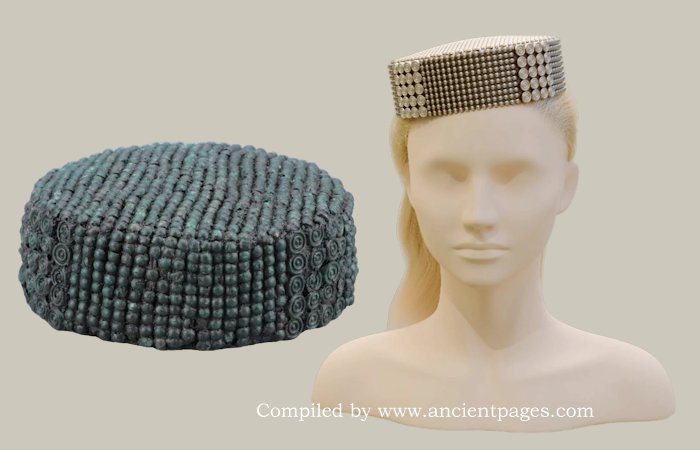
Credit: Valentin S. Shramko, Irina Shramko, Arts 2026 – Image compilation AncientPages.com
Scientists say that a Bilsk burial mound from the late 6th century BC revealed another elite grave in the Skorobir necropolis, with a funerary headdress decorated with gold plaques. The grave also had a unique set of Central European leather items: a belt and a cap. These were not part of the usual funerary costume but were included in the burial.
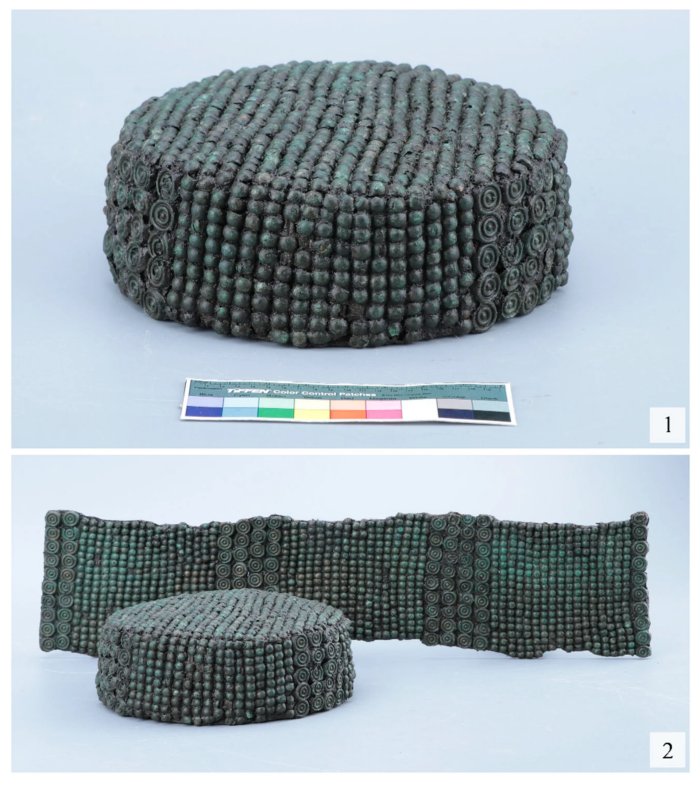
Items of clothing after completion of the conservation work (1). Cap; (2). Set (belt and cap). Credit: Roman S. Horoian
The two objects, about 2,500 years old, were found at the woman’s head and feet. They are very well preserved, which is unusual for leather. This find comes from a double burial in a late 6th-century BC mound, where the woman, aged 18 to 22, was buried next to a male warrior about 35 years old. Alongside sacred objects such as a mirror, a gaming set, a stone slab, and an antler dish, the belt and cap likely formed part of a female ceremonial dress, highlighting the woman’s special status in society. Their preservation enables reconstruction of their shape, manufacturing techniques, and the design of a previously unknown Central European Hallstatt-period headdress.
The leather items feature typical features of the Central European Hallstatt tradition, such as small plaques used to decorate clothing and the use of belts and headgear in funerary dress. Since the cap and belt were found with ritual objects, they may have belonged to a woman with priestly duties. These traditional items suggest she was part of a specific ethnic group. The gold plaque shows she had high social status and was part of the elite. In a similar case, a gold diadem from a young woman buried in the second quarter of the 6th century BC in the Skorobir cemetery was also decorated with gold plaques and temporal rings.
Graves at the Bilsk hillfort usually have locally made pottery, sometimes ancient imports, horse harness parts decorated in the Scythian animal style, Scythian weapons, mirrors, and a stone dish or slab. This makes the discovery of the 2,500-year-old leather cap and belt all the more remarkable.
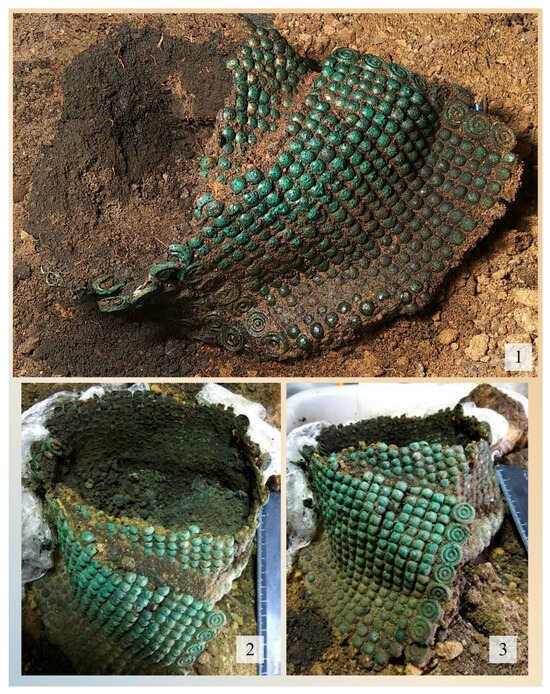
The leather belt. Iryna B. Shramko, Stanislav A. Zadnikov
The belt and cap are not typical for the Scythian population, so they have helped researchers better understand Bilsk’s connections to the Hallstatt world, the makeup of the local people, and how the local elite formed.
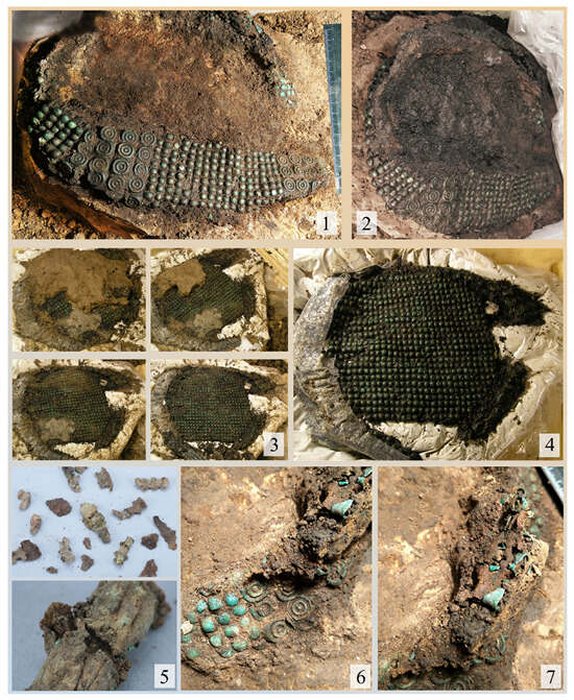
The leather cap. Credit: Iryna B. Shramko, Stanislav A. Zadnikov, Volodymyr P. Bolotin, Roman S. Horoian
Because the leather items decorated with bronze staple plaques were well preserved, researchers have identified a new type of European women’s headgear for the first time. DNA analysis of the remains suggests the set was probably made in Croatia, where the Iapodes lived in the Early Iron Age, and the buried woman was likely related to them.
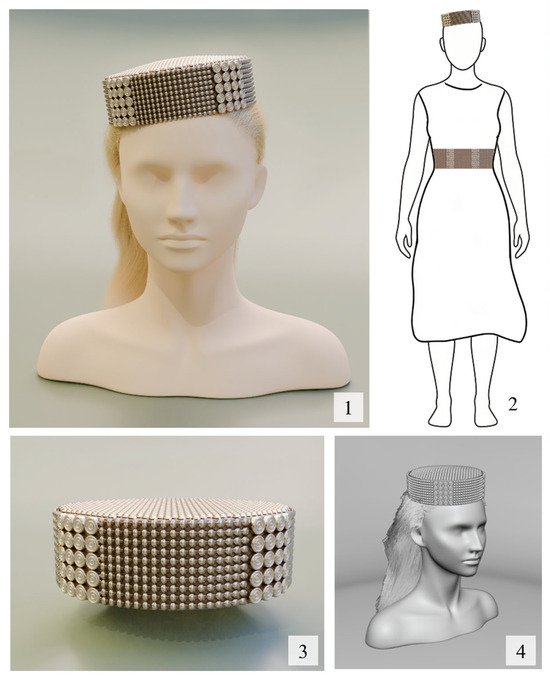
Three-dimensional reconstruction of the cap. Credit: Valentin S. Shramko
The cap resembles the traditional “Lika” cap from modern Croatia, which supports this idea. There is no sign of Scythian military activity in this area, so the finds probably are not connected to their campaigns in Central Europe. Instead, the belt and cap likely show traditional clothing from the woman’s family, brought to the hillfort by migrants from the West. As a descendant of elite migrants, the young woman likely held a special role in the community, perhaps as a priestess.
See also: More Archaeology News
The burial from the last quarter of the 6th century BC can be grouped with earlier priestess graves in the Skorobir necropolis, which also had gold-adorned headgear. This find greatly extends the known timeline of elite women’s burials in forest-steppe Scythia to the end of the 6th century BC.
The analyzed materials also show that the social and ethnic composition of the inhabitants of the Bilsk hillfort was quite complex.
Source: MDPI
Written by Jan Bartek – AncientPages.com Staff Writer