

Jan Bartek – AncientPages.com – Researchers from the University of Warsaw and the University of Tirana have discovered a large Hellenistic temple in an ancient city in northern Albania. This is the first Illyrian structure of its kind found in the region and marks a significant advancement in research on the lost city of Bassania.
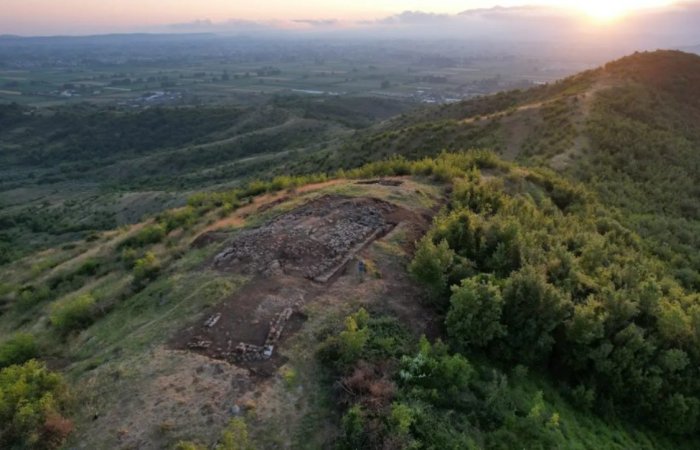
Excavations in Albania. Credit: University of Warsaw
Bassania was a city referenced by the Roman historian Livy (59 BC–17 AD) during the Roman army’s conflict with the last Illyrian king, Gentius. While the city was likely inhabited by Illyrians, a Greek community may also have been present, given the proximity of the Greek city of Lissos to Bushat.
The reasons for the city’s abandonment remain unclear. Recent research confirms that the city ceased to exist at the beginning of the 1st century AD, at the end of Emperor Octavian Augustus’s reign. It was likely abandoned or destroyed during the Roman invasion, and its name may have been forgotten.
Modern-day Bushat, located about 10 km south of Shkodra in northern Albania, contains the remains of a large Illyrian settlement. The site is one of Europe’s few “lost cities,” erased from maps and collective memory over centuries.
Archaeologists from the University of Warsaw’s Antiquity of Southeastern Europe Research Center and the University of Tirana rediscovered the city in 2018. Topographical analysis and comparison with ancient sources suggest it may be ancient Bassania.
During the recent research season, excavations focused on the city’s acropolis, situated on a hill overlooking the site. Archaeologists uncovered the complete stone foundations of a large rectangular structure measuring 13.6 by 9.6 meters. Its proportions align with classical Greek temples.
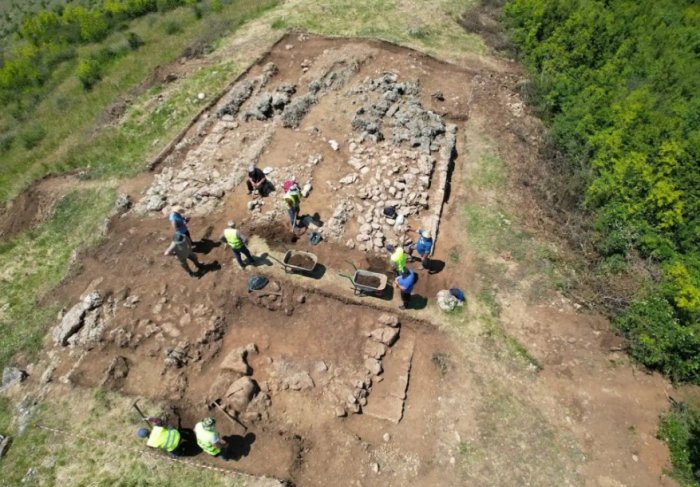
Credit: University of Warsaw
During the recent research season, excavations focused on the city’s acropolis, situated on a hill overlooking the site. Archaeologists uncovered the complete stone foundations of a large rectangular structure measuring 13.6 by 9.6 meters. Its proportions align with those of classical Greek temples.
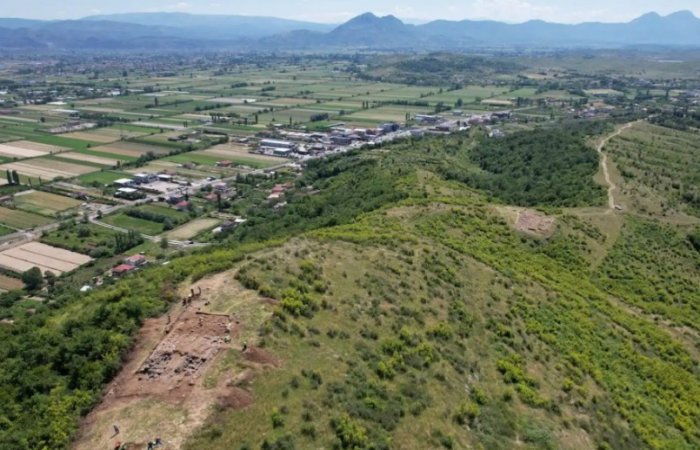
Credit: University of Warsaw
Professor Piotr Dyczek, director of the Antiquity of Southeastern Europe Research Center at the University of Warsaw, explains: “Judging by the structure’s location at the top of the hill and its orientation towards the cardinal directions, we can assume these are the remains of a temple that crowned the city’s acropolis from the 4th to the 2nd century BC.” He adds: “During the work, we also partially uncovered the defensive wall surrounding the hill, which formed the temple temenos.”
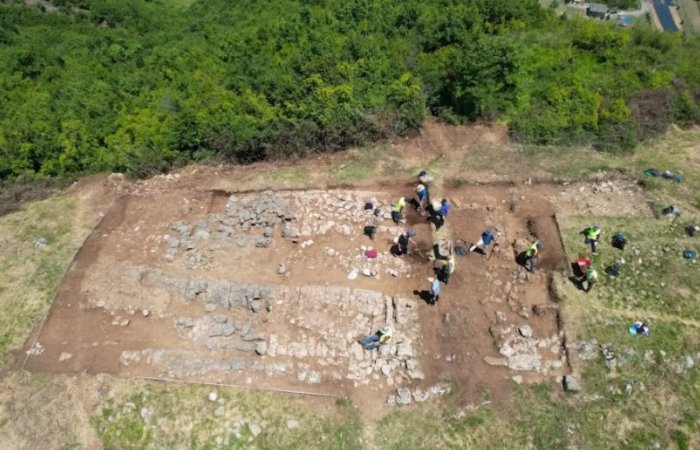
Credit: University of Warsaw
This discovery is especially important for the study of Illyrian culture, as it is the first Illyrian temple found in northern Albania.
See also: More Archaeology News
The city was abandoned during the Hellenistic period. In the 3rd century AD, the Romans built a small structure next to the temple ruins that remained in use for nearly 100 years. This observation post enabled control over a wide area from Shkodra to ancient Lissos and the Adriatic coast.
Source: University of Warsaw
Written by Jan Bartek – AncientPages.com Staff Writer