

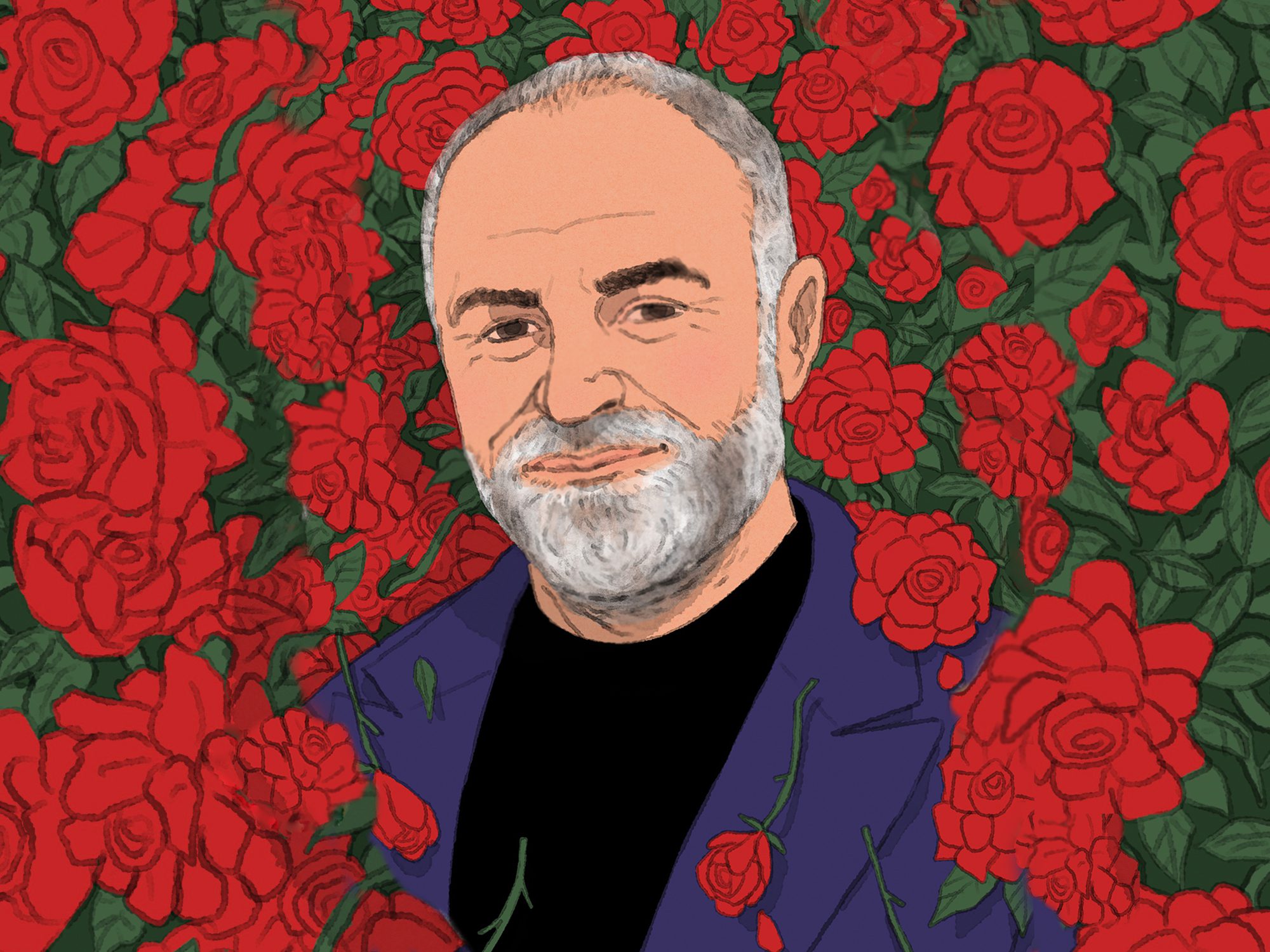
Brazilian-Algerian director Karim Aïnouz is a keen collaborator. He doesn’t write his own screenplays and was intrigued by Efthimis Filippou’s modern reimagining of Marco Bellocchio’s Fists in the Pocket as he eyed up making a leap to satire. Filippou is best known for his work with Yorgos Lanthimos, and with Rosebush Pruning the pair have crafted a sick, sad world of blackly comic despair, following a rich American family living in Spain under disturbing patriarchal rule.
LWLies: I was struck by the visuals and cinematography by Hélène Louvart, who you have previously collaborated with. Can you talk to me about your working relationship with Hélène?
Get more Little White Lies
Aïnouz: We met in 2018 on The Invisible Life. Working with two actresses who had never been on a movie set before, I really wanted to have a woman DOP to create a sense of safeness on set. I really connected with Hélène because there was a movie she had done called The Wonders, which had a profound sense of humanity. There was a beauty that wasn’t narcissistic and the framing was organic. This is our fourth collaboration back to back, and I think the reason we really connected… well, there’s a few things – she’s a Virgo, she’s really precise and obsessed with light and how the light hits the characters and creates atmosphere. With Hélène there’s something about the strong intimate connection she has with the characters that, for me, is so beautiful.
This film also marks a new collaboration with the screenwriter Efthimis Filippou. How did that come about?
The collaboration is the result of a brilliant producer. At first sight we don’t seem like we would be a match because my films are sentimental. I work a lot within melodrama and he works in a different key. There was a sense of humour he has on paper, on set and off set, that really connected us. There is a real sense of love for people. We first met during the pandemic on Zoom. He was warm and funny. He really allowed me to play with humour and irony, which was always something that I wanted to do but never really got to go there before. He really pushed me to that place. It was really liberating. We looked at that family not as dysfunctional but as a damaged family, and that renders a sense of humanity to each character. It’s very contradictory. They’re not necessarily people who you actually like, but it was important for me that they had a sense of humanity. This was really something he brought.
I enjoyed the use of Pet Shop Boys’ ‘Paninaro’ on the soundtrack – can you tell me about that choice?
It was there from the first draft of the script. At the time when that song was composed, it was about how Italy was losing its identity and becoming American. That was a really conceptual choice. There’s a sense of irony and trashiness to that song that I really love. The music came about because I wanted to design a universe that was very pop. With Jack [Jamie Bell] he is aspirational, so he’s a square guy who loves techno music. It’s like with fashion and how you access a certain identity by buying certain brands and how you access that also through the music you listen to.
Shock-value filmmaking from people like John Waters can be extremely confronting and thought-provoking…
I was thinking about John Waters and the early movies of [Pedro] Almodóvar. Camp and outrage were really important factors and together they create shock and scandal. I was interested in questioning the safe space of contemporary cinema. There are a lot of movies being made about certain themes and made with very good intentions, and I’m not thinking that they shouldn’t be but I’m also lacking a sense of disruption in the things we can do in cinema. Maybe what’s interesting in a cinematic experience is not empathy but perhaps it’s discomfort. These are tropes of the cinematic experience that are so important and that are there throughout the history of cinema. I think that has been subsumed into a conceptual relationship we have with character. Before I shot this film I saw a play by an Austrian choreographer called Florentina Holzinger. There was a sense of outrageousness that really reminded me of early queer cinema. John Waters had this sense of the scatological and outrageousness. Some may think it’s juvenile, but I think it has a sense of disruption and a really exciting energy that he brought to film.