

Delhi, India’s huge capital, is a beautiful paradox where old heritage meets contemporary ambition. This makes it a great place for budget-conscious tourists to visit. Delhi is an amazing place for travelers who are ready to brave its crowded streets, fragrant spice shops, and stunning landmarks. Plus, it won’t break the bank. This city rewards those who accept its complexity with wonderful memories and surprisingly cheap experiences, whether you’re meandering through the winding streets of Old Delhi or admiring the colonial grandeur of New Delhi.
Understanding Delhi’s Two Souls
To make the most of their time in Delhi, travelers must know that the city has two very different sides. Mughal Emperor Shah Jahan built Old Delhi in the 17th century. It is a busy area with small streets, ancient sites, and busy markets where tradition rules. British architect Edwin Lutyens built New Delhi in the early 1900s. It has broad boulevards, huge parks, and big government buildings that show how ambitious the British were when they colonized India. Understanding this difference helps travelers make smart decisions about where to stay and what to do depending on the kind of setting they want.
Getting There and Airport Transfers
Indira Gandhi International Airport in Delhi is the main airport for foreign and local visitors. The Airport Express Metro Line is the cheapest route to go to downtown Delhi. It links the airport to New Delhi Railway Station and Connaught Place and takes about 20-25 minutes. If you’re planning to fly to Delhi, you may want to look into Almosafer Flights for good prices and discounts that might help you save money right away. Local buses also run from the airport to different sections of the city, but these take a lot longer and may be hard to figure out for first-time tourists.
Where to Stay – Accommodation for Every Budget
Paharganj (The Backpacker Hub)
Paharganj, which is close to New Delhi Railway Station, is still the best place for backpackers since it has so many hostels, affordable hotels, and travel agencies. Hostels like Zostel and Hosteller Delhi are popular because they include clean rooms, shared kitchens, free Wi-Fi, and chances to meet other travelers. The region is full of life, has a lot of restaurants providing food from all over the world, and has great metro access to attractions in both Old and New Delhi.
Connaught Place (Central and Connected)
Backpackers looking for a nicer place to stay with greater facilities may find mid-range hostels and guesthouses in Connaught Place. This circular market area from the colonial period is in the middle of everything, has cleaner streets, and seems more cosmopolitan. The YWCA International Guest House is a great deal since it has big rooms, free breakfast, and a secure place to stay.
Old Delhi (Immersive Experience)
If you stay at Chandni Chowk, you’ll be in the middle of old Delhi, close to Jama Masjid, Red Fort, and great street food. The lodgings here are more rudimentary, but they’re real and very cheap. Private rooms at guesthouses are available. The continual activity, the call to prayer from Jama Masjid, and the tiny streets all make for a very cultural experience.
Getting Around – Transportation Hacks
Delhi Metro (Your Best Friend)
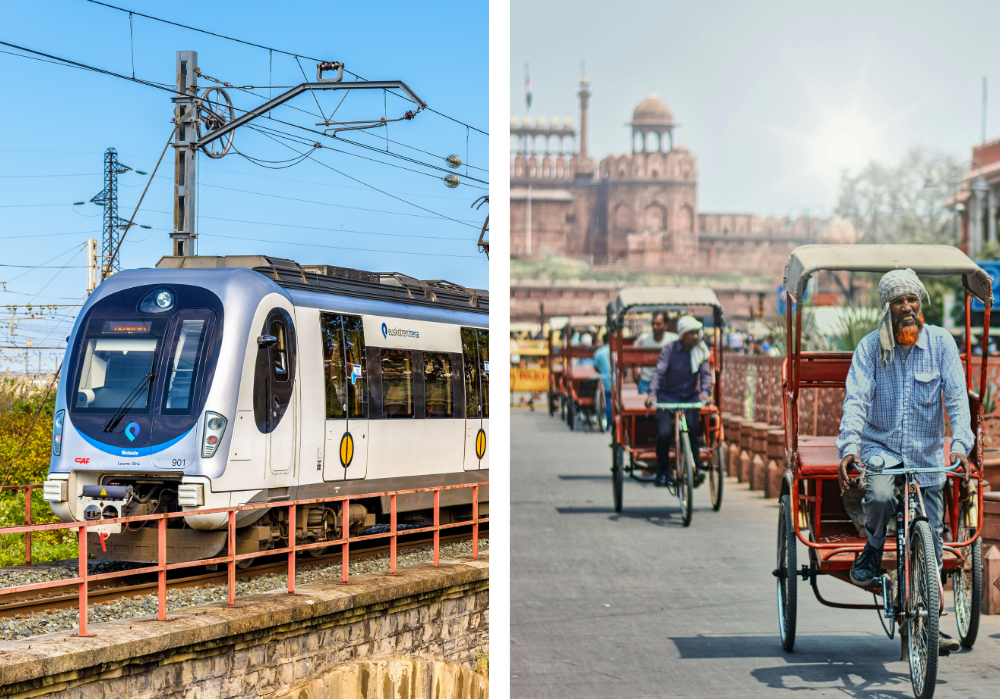
The best way to bypass this huge city is the Delhi Metro. It’s cheap, fast, and pleasant. Metro prices vary depending on how far you go. They cover most major attractions and areas. You can also buy a metro card at any station kiosk and fill it with some money to avoid having to wait in line for tokens every time you ride. Don’t get the tourist card since it doesn’t function on all lines and isn’t worth the money. The metro runs from around 6 AM to 11 PM. At busy times, trains come every few minutes.
Auto-Rickshaws and Walking
Auto-rickshaws are a great way to get around neighborhoods for short distances, and they’re affordable. To prevent arguments, always ask for the meter or settle the price before you leave. Walking is still the ideal way to see places like Chandni Chowk, Paharganj, and Connaught Place, where you can find hidden treasures and talk to people. Uber is also available around Delhi and has very low pricing.
Read Next: Backpackers Guide To Transportation in India
Exploring Old Delhi – Historical Immersion
Jama Masjid (Architectural Grandeur)
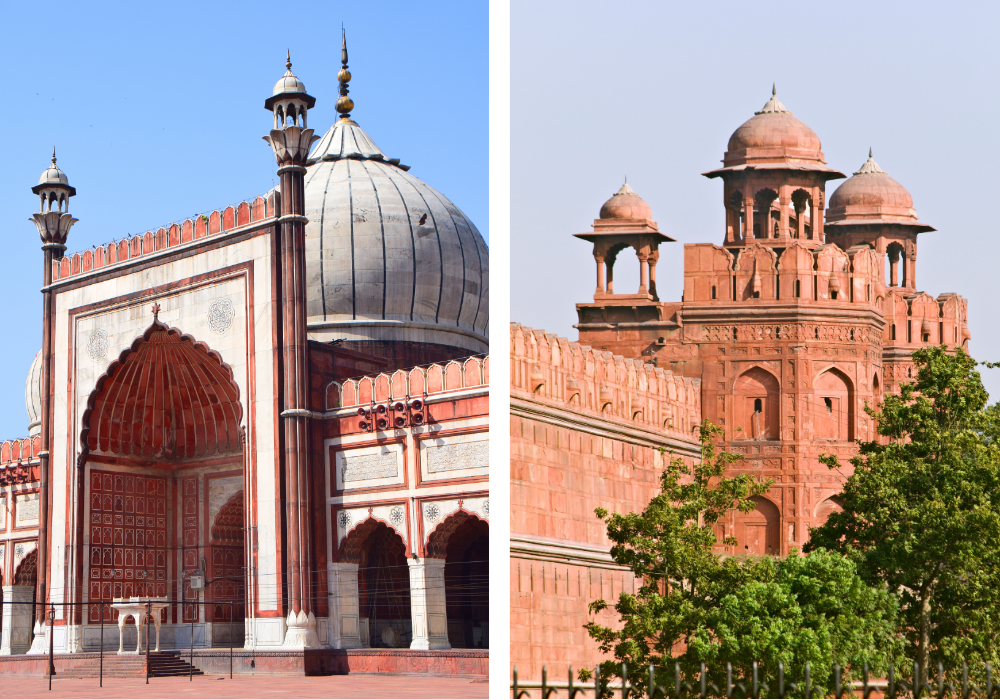
In 1656, Shah Jahan built the Jama Masjid, which is the biggest mosque in India. Anyone may come for free, no matter what religion they are. Dress modestly with covered shoulders and legs, remove shoes before entering, and consider climbing the southern minaret for a little admission charge to experience amazing panoramic views of Old Delhi’s chaotic roofs and busy streets. To really see the big courtyard that can house 25,000 people, go when there aren’t any prayers going on.
Red Fort (Mughal Magnificence)
This UNESCO World Heritage Site was the royal seat of Mughal rulers for approximately 200 years and features exquisite red sandstone architecture. There’s an entry charge and the facility is open from 9.30 AM to 4.30 PM every day except Mondays. You should plan on spending two to three hours seeing the numerous palaces, museums, and gardens in the big complex. The nightly light and sound show, which costs extra, brings Mughal history to life with a dramatic narrative.
Chandni Chowk (Sensory Overload)
Chandni Chowk is one of the biggest wholesale marketplaces in Asia. There are a lot of stores on its short lanes that offer anything from spices to gadgets, which may be a lot to take in. You don’t have to pay to get in, and simply meandering around these historic streets may keep you occupied for hours. Go in the early morning (7–9 AM) to avoid the bustle and observe the market come to life. Kinari Bazaar is a great place to buy wedding supplies. Dariba Kalan is a great place to buy jewelry. Khari Baoli is Asia’s greatest spice bazaar, and it smells beautiful because of the mountains of turmeric, pepper, and cardamom.
Paranthe Wali Gali (Food Heaven)
This renowned little lane in Chandni Chowk has been making filled parathas since the 1870s. There are various family-run businesses that serve parathas loaded with potatoes, paneer, cauliflower, radish, and even sweet fillings like rabri. You may eat them with sour chutneys, yogurt, and pickles. This affordable, filling supper is a perfect illustration of how good true Delhi cuisine can be.
Navigating New Delhi – Colonial Legacy
India Gate and Rajpath
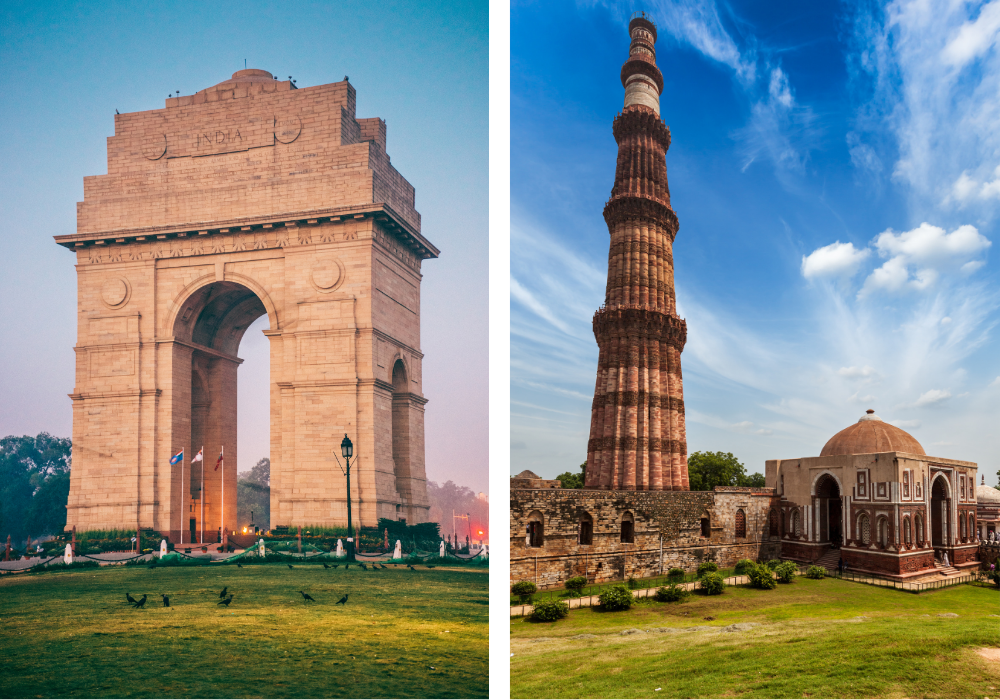
India Gate is a 42-meter-high military monument that commemorates Indian warriors. It is New Delhi’s most recognized landmark and is free to visit. The gardens surrounding the neighborhood are wonderful locations to enjoy a picnic, and in the evenings, merchants provide food and ice cream. The vast Rajpath avenue extends from India Gate to Rashtrapati Bhavan (the Presidential Palace), showcasing Lutyens’ superb city design.
Humayun’s Tomb (Architectural Inspiration)
This exquisite mausoleum from the 16th century, which inspired the design of the Taj Mahal, requires an admission fee for tourists. The UNESCO World Heritage Site has exquisite Mughal gardens, intricate marble inlay work, and quiet landscapes excellent for afternoon wandering. Taking images is free, but filming videos costs more. Go during the golden hour before sunset, when the red sandstone sparkles beautifully.
Qutub Minar (Medieval Marvel)
The Qutub Minar complex is the highest brick minaret in the world, at 73 meters. The archeological region around it has ancient iron pillars, wrecked mosques, and stone sculptures that are hundreds of years old. Plan on spending one to two hours visiting this UNESCO World Heritage Site in South Delhi.
Connaught Place (Colonial Circle)
Robert Tor Russell, a British architect, constructed this circular market where you may freely explore Georgian-style colonnaded buildings, merchants from throughout the world, and Indian handmade emporiums. The central park has cultural events, and the region is a transit hub with great metro access. It doesn’t cost anything to look at things in windows, observe people, or absorb the colonial ambiance.
Food – Eating Well on a Budget
Street Food Adventures
Delhi’s street food scene has the best prices and most authentic dishes. Golgappe, or pani puri, are crispy hollow puris filled with spicy tamarind water, potatoes, and chickpeas. They are Delhi’s most famous snacks and can be found almost everywhere. Aloo tikki are spicy potato patties that are fried till crispy and served with chutneys and yogurt and are a great snack. Chole bhature, a full breakfast or lunch is a spicy chickpea curry with fluffy fried bread you should definitely try.
Where to Eat Safely
Stick to busy vendors where residents line up, which will make sure the food is fresh and lower the danger of foodborne illness. Bengali Market in Connaught Place, Kamla Nagar, and Sarojini Nagar Market are all great places to get a lot of street cuisine. Aslam Chicken Corner in Old Delhi serves famed kebabs, nihari (slow-cooked beef stew), and butter chicken. Always have hand sanitizer with you, drink bottled water, and stay away from raw veggies at first until your stomach gets used to it.
Hostel Kitchens and Free Meals
Many hostels include shared kitchens where travelers may cook meals using items they buy at local shops. This cuts food prices a lot. Some hostels provide complimentary breakfast, and eating supper with other visitors gives you a chance to share meals and stories with them. You may buy fresh fruits and vegetables in local supermarkets and vegetable markets for very little money.
Read Next: The Best Vegan Food Dishes in India
Free and Low-Cost Activities
Temple Hopping
Delhi has hundreds of beautiful temples that are mostly free to enter. Some of the most famous ones are the huge Akshardham Temple complex (which is closed on Mondays), the Lotus Temple with its unique flower-like architecture, and the colorful Gurudwara Bangla Sahib, which welcomes everyone and serves free vegetarian meals. These places are tranquil escapes from the tumult of Delhi and show off a wide range of religious architecture.
Walking Tours
There are free walking tours in places like Nizamuddin Basti that are guided by expert guides who work for tips. These tours teach you about the area’s culture, history, and architecture. Self-guided excursions through Hauz Khas Village, Mehrauli Archaeological Park, and Lodhi Gardens are free and show you the many layers of Delhi’s history.
Parks and Gardens
Lodhi Gardens is a 90-acre park with 15th-century tombs set among well-kept lawns and walking trails. It is free to enter and is a popular place for runners and picnickers in the morning. In South Delhi, the Garden of Five Senses has free creative landscapes and cultural areas.
Money-Saving Tips for Backpackers
Bargaining Essentials
Negotiation is expected in markets; start at 40-50% of the advertised price and conclude at 60-70%. Don’t show too much attention, be ready to go, and shop where locals do instead of establishments that cater to tourists. If you want clear pricing, fixed-price government stores are a great place to get high-quality handicrafts without having to haggle.
Timing Your Visit
Visit in the shoulder seasons (February-March or September-October) when the weather is nice but there aren’t as many tourists. This typically leads to better bargains on places to stay. Stay away from the hottest months of summer (May to July) when temperatures may reach above 40°C and the fog in winter (December to January) can make travel hard.
Combo Tickets and Student Discounts
Some archeological sites provide combination tickets that let you see more than one monument for a lower price. International Student Identity Cards (ISIC) provide you with discounts on several attractions and transportation. Even if they aren’t promoted, always inquire about student discounts.
Safety Considerations for Budget Travelers
Common Scams to Avoid
Be careful of gem scams where polite individuals ask you to send gems overseas for money, auto-rickshaw drivers say your hotel is full and suggest other options, and false travel companies in Paharganj. Always book your lodgings via trusted sites, utilize metered transportation, or agree on fares ahead of time. If something doesn’t seem right, follow your gut.
Staying Healthy
Only drink bottled water, don’t put ice in your beverages, and don’t go crazy with street food right away. Bring a basic medical kit containing antiseptic, anti-diarrheal medicine, and rehydration salts. Many people who backpack have modest stomach problems in the first few days. This is natural and normally goes away as your body gets used to it.
Solo Female Travelers
Delhi is a place where solo women need to be extra careful, yet thousands of women travel securely by taking simple steps. Wear clothes that protect your shoulders and knees, don’t travel alone late at night, use an app to get around instead of hailing a cab on the street, and stay in hostels that other women travelers have spoken nice things about. The YWCA and women-only dormitories provide more safety and a sense of community.
Read Next: How To Prepare For Travel In India
Cultural Etiquette and Respect
Dress Appropriately
Delhi is rather conservative outside the nicer sections. When you go to religious locations, be sure to cover your shoulders and legs. Take off your shoes before entering a temple or mosque. Dressing modestly also keeps others from staring at you and demonstrates respect for the local culture.
Photography Permissions
Always ask anyone, particularly ladies, whether you may take their picture. Some religious places don’t allow photos within sanctums or demand a fee for them. You can’t take pictures at military bases or metro stations.
Conclusion
Delhi gives daring travelers amazing experiences that are a mix of historical grandeur, cultural authenticity, and amazing low prices. At first, the city’s turmoil is too much to handle, but soon it shows patterns, rhythms, and acts of compassion that turn perplexity into interest.
Backpackers may see a lot of Old and New Delhi while spending a lot less than in most other world capitals if they plan ahead, are aware of other cultures, and are open to new experiences.
The experiences of navigating Delhi’s contradictions, ancient monuments next to contemporary metros, street food carts next to luxury hotels, and noisy bazaars that open into peaceful gardens, make tales that last long after the trip is over.