

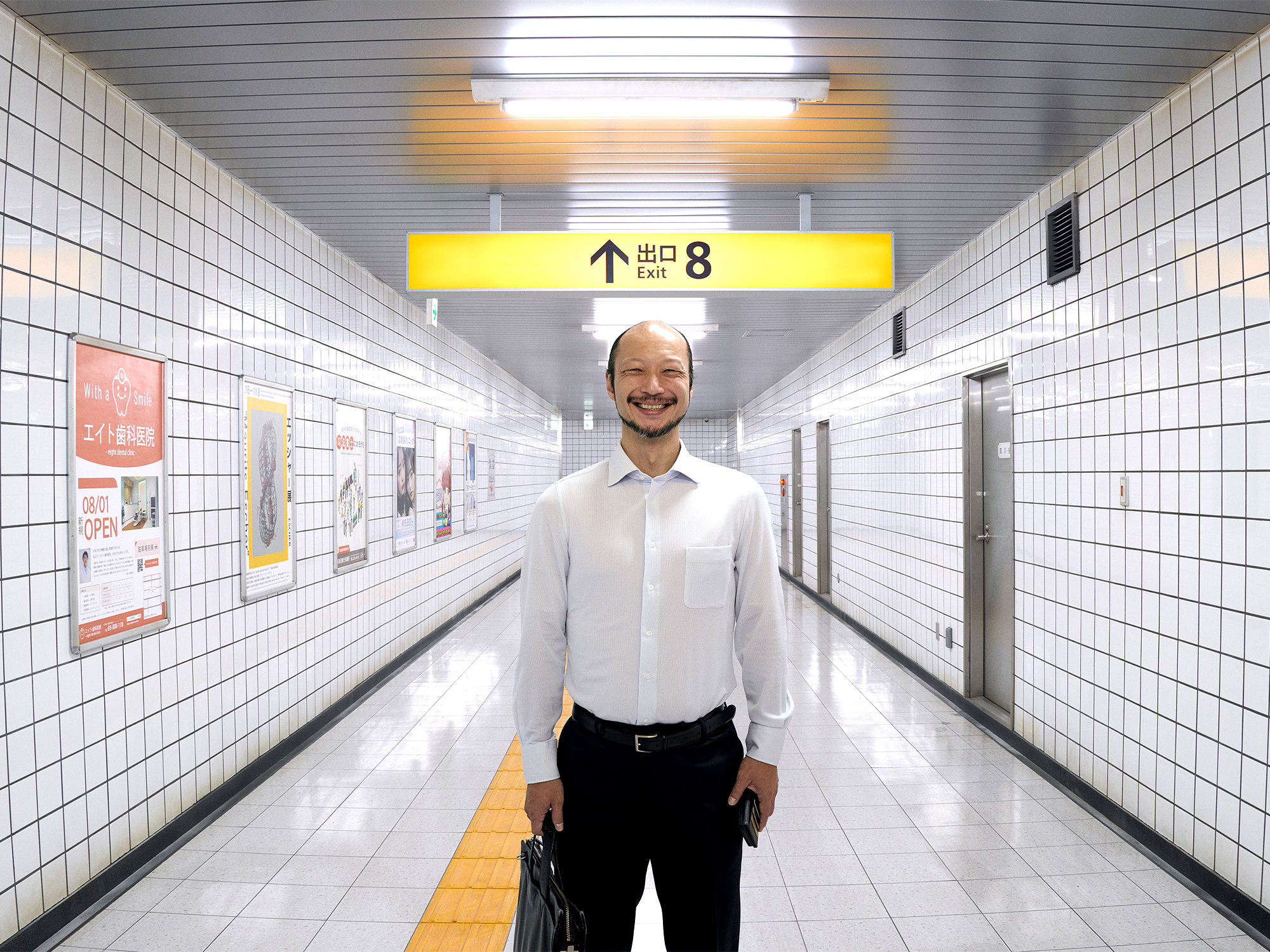
Although the settings and specific genre trappings vary, time-loop films are generally united by the theme of bettering oneself in order to improve your circumstances or alter your perspective on life going forward, should you ever escape the fantastical situation that’s causing you to repeat the same week, day or even two-minute period over and over. Exit 8 isn’t quite structured like a traditional time-loop film, but there’s enough temporal mischief amid this psychological horror’s creepy delights to ultimately qualify as one. And changing one’s mind about how to approach your hopeful future is absolutely key to the movie’s ideas beyond its frights.
Written with Kentaro Hirase, director Genki Kawamura’s film is based on the video game ‘The Exit 8’ from the indie developer Kotake Create. In contrast to most games getting high-profile film and TV adaptations (‘Mario’, ‘Fallout’, et al.), ‘The Exit 8’ doesn’t have lore, established characters or even a basic story template to translate to a different medium. It’s essentially a “spot the difference” walking simulator where you travel, via a first-person perspective, through an underground tunnel in a Japanese subway station while searching for the way out.
Get more Little White Lies
To find the titular Exit 8 (you start near signage for Exit 0), you must traverse through multiple loops of the same passageway while looking out for anomalies. Whenever you notice something out of place (on signs, posters or with a man you see walking the same route endlessly), you must turn back, lest horrible things occur. If there are no anomalies, you should continue walking forwards. If you miss an anomaly and continue forward instead of going back, your progress will reset back to Exit 0.
In turning this non-narrative game into a narrative movie, the filmmakers mostly replicate the source material’s subway station set and retain the first-person perspective, until, funnily enough, the film’s eighth minute. From that point, as the looping situation properly dawns on him, the film’s primary, unnamed lost man (Kazunari Ninomiya) is able to exist as a character beyond just a voice. An anxious individual, he’s processing news from his ex-girlfriend that he might soon be a father, before fate traps him in the subway passageway as he attempts to see her at the hospital. Freaky anomalies – screaming lockers, dripping blood, Aphex Twin grins – rack up quickly, with instructions on a wall offering only vague directions towards escape, for both the lost man and other souls navigating this maze.
It’s when a particular one of those other trapped parties takes co-centre stage that the concept’s sustainability as a 95-minute feature is tested. That’s not due to the secondary character’s plight being uninteresting, and the protagonist having to keep a fellow traveller in mind is a wise shake-up of the established formula. But the impressive momentum of the first hour, in spite of the inherent repetition, dissipates when the onscreen players start loitering and even sitting down to talk. In its third act, this otherwise effective thriller about getting stuck does end up spinning its own wheels.