

Jan Bartek – AncientPages.com – The Anglo-Saxon plan was earnest and well-intentioned, yet the outcome did not align with what King Æthelred II had hoped for. The sacred coins, created to offer protection against the fearsome Vikings, were part of a sincere and determined effort. Faced with repeated and devastating Viking invasions, Æthelred II sought to unite both the kingdom and the church in 1009, turning to extensive penance, fasting, and even commissioning a special coin with Christian motifs to seek divine support.
Although the coins did not bring about the protection he desired, their story has taken on a remarkable new life. Instead of serving as spiritual defense, it appears the Vikings themselves valued these coins so highly that they wore them as jewelry!
Today, the rediscovery of two of these rare silver coins in Denmark—one near Løgumkloster and another at Kåstrup in Thy—offers us a fascinating glimpse into the past. Their survival and reappearance are a testament to the enduring legacy of those efforts and the rich, intertwined history of the English and the Vikings.
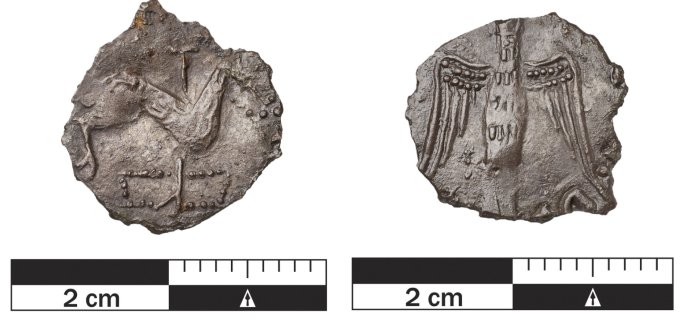
The coin found in Løgumkloster. Credit: Søren Greve, Nationalmuseet.
“I felt a pang in my stomach because the coins are very rare and carry an unusual, yet paradoxical history. They were created in an attempt to gain protection against the Vikings, but instead ended up as valued jewelry or amulets around the Vikings’ necks. It’s a bit tragicomic,” says Gitte Tarnow Ingvardson, curator at the National Museum.
Rare Lamb Of God Coins
The so-called English “Lamb of God” coins are a very rare type of medieval coinage, with only about 30 known examples worldwide. Of these, just 4–5 have been found in England; the rest have been discovered in Scandinavian and Baltic regions. In those areas, most examples have small loops attached, suggesting that Vikings repurposed the coins as pendants or amulets, likely worn around the neck.
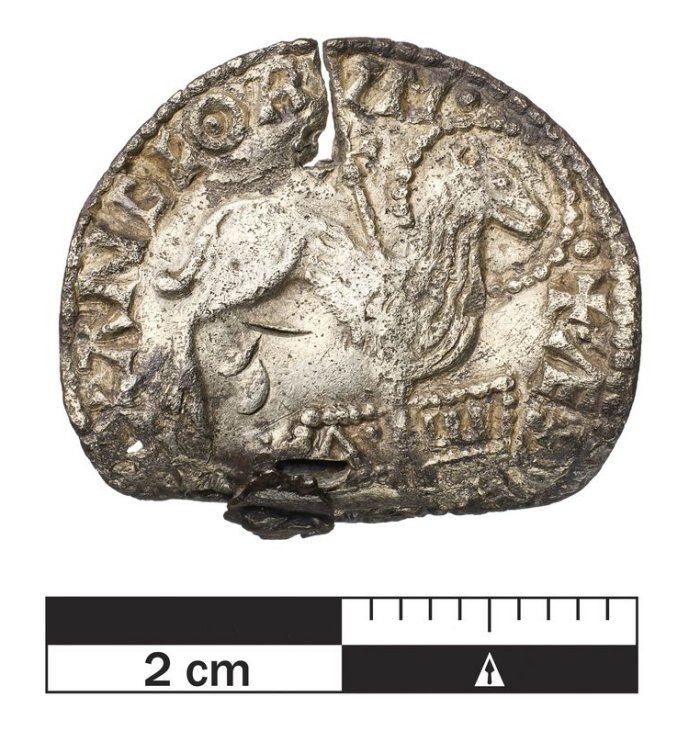
The coin found in Thy. Credit: Søren Greve, Nationalmuseet.
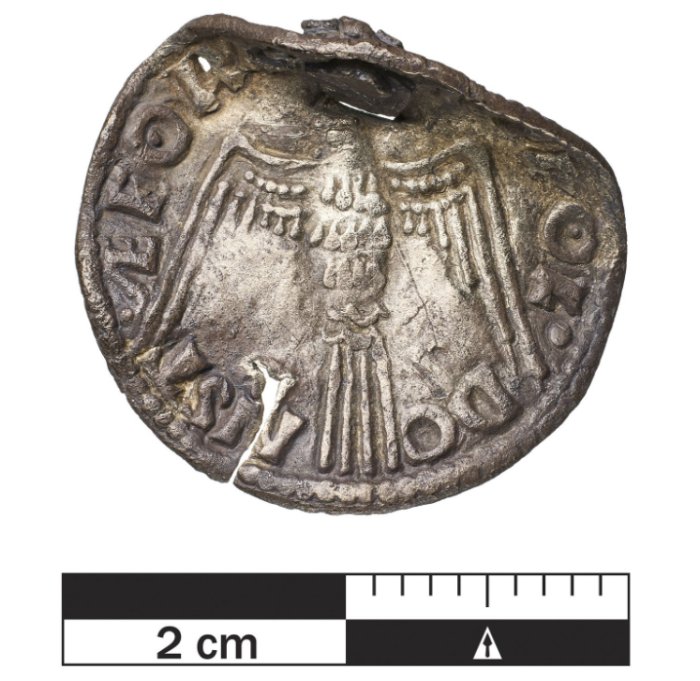
The other side of the coin found in Thy. The coin found in Thy. Credit: Søren Greve, Nationalmuseet.
These coins stand out clearly from typical English coins of the same period, which usually display the reigning king’s portrait on one side and a cross on the reverse. In contrast, the Lamb of God coins feature religious imagery. One side shows a lamb pierced by a cross, a Christian symbol representing Christ’s sacrifice. The lamb stands on a tablet inscribed with the Greek letters alpha and omega, signifying that God is the beginning and the end of all things. The other side of the coin depicts an ascending dove, symbolizing the Holy Spirit.
Inspiring Danish Coins
The implementation was likely limited and short-lived, and it is reasonable to consider that it may have been abandoned because it failed to produce the desired results. What we do know with certainty is that the Viking attacks did not cease. Instead, the vast quantities of English coins seized during these raids profoundly shaped the way the Danish Viking kings later organized their own coinage in Denmark.
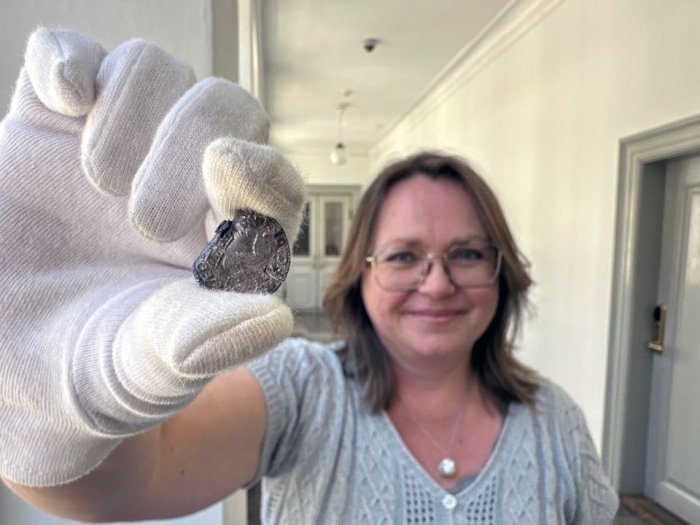
Gitte Tarnow Ingvardson with one of the two so-called Lamb of God coins found by detectorists at Løgumkloster and in Thy. Credit: John Fhær Engedal Nissen, Nationalmuseet.
“The Danish mint is inspired by and based on the well-ordered English coinage system. The Vikings quickly discovered that it was much smarter to use coins than to cut silver into pieces when trading,” says Gitte Tarnow Ingvardson.
Even the Lamb of God coins were copied locally. The Viking Kings Canute the Great and his son Harthacnut produced coins featuring the same two motifs, as did Sweyn Estridsen, who later played a key role in shaping the structure of the Danish church. According to Gitte Tarnow Ingvardson, these many historical connections contribute significantly to what makes this coin unusual.
See also: More Archaeology News
What fascinates me most is how, from such a small coin, you can unfold a story about the English kings and Christianity in England, drawing threads to the Danish Viking kings, the Danish mint, and even the establishment of the Danish state, because it affects the entirety of Viking society. Imagine that such a small coin contains so much history!
Source: Nationalmuseet
Written by Jan Bartek – AncientPages.com Staff Writer