

Episode Transcript
This is a computer-generated transcript. While our team has reviewed it, there may be errors.
Ki Sung: Welcome to the MindShift podcast, where we explore the future of learning and how we raise our kids. I’m Ki Sung. There’s been no shortage of stories about what’s troubling kids today, the outbursts, the apathy, the mental health concerns. We’re seeing some signs of progress through solutions like limiting screen time and having more in real-life social interactions, but there are still students who need help.
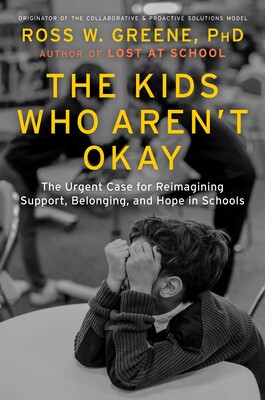 Ki Sung: Dr. Ross Greene developed the Collaborative and Proactive Solutions Model to help all students, and it requires a different way of responding to students’ behavior. He’s the author of the recently published book, The Kids Who Aren’t Okay: The Urgent Case for Reimagining Support, Belonging, and Hope in Schools.
Ki Sung: He’s also the bestselling author of several other books, including The Explosive Child and Lost at School.
Ki Sung: Welcome, Dr. Greene.
Ross Greene: Thank you for inviting me to do this.
Ki Sung: Thank you so much for being here. Let’s talk first about what you describe as concerning behavior, the stuff that gets kids sent to the principal’s office.
Ki Sung: You say concerning behavior is how kids communicate that they’re having difficulty meeting a particular expectation. Can you tell us more?
Ross Greene: I do say that all the time, and I wish everybody knew that. We’ve, we’ve all become accustomed to the cliche “All behavior is communication.” Somehow, it doesn’t translate for a lot of people that concerning behavior communicates that a kid is frustrated or distressed.
Ross Greene: Concerning behavior is a frustration or distress response, and almost always, what the student is frustrated or distressed about is an expectation that they’re having difficulty meeting. Um, if all we pay attention to is the behavior, then we’re gonna be kinda narrow in what we can do, or… ’cause when you’re focused on behavior, all you can really do is try to modify it, and that’s usually accomplished through some mix of rewards and punishments.
Ross Greene: But rewards and punishments, what a lot of people refer to as consequences, aren’t problem-solving strategies. So we have a lot of students who have experienced a lot of consequences and who are still doing poorly because the problems that are causing the behaviors that we’ve been busy consequencing often haven’t even been identified, let alone solved.
Ki Sung: Um, it’s kinda wild to hear you say that because I hear a lot of focus on the behavior. So what are you proposing we do?
Ross Greene: I am proposing that we de-emphasize our focus on behavior, and by the way, our focus on behavior Is all around us. We are, um… When we have a kid who’s struggling and communicating that they’re struggling through their behavior, we do behavior checklists, we do behavior observations, we do a functional behavior assessment all so that we can come up with a behavior plan.
Ross Greene: When a student is struggling in a classroom and communicate that through their concerning behavior, they get a discipline referral, and what the, the information that is mostly passed along to the people who are on the receiving end of those discipline referrals is the kid’s concerning behavior. And what they often do about it is give the kid consequences for their concerning behavior.
Ross Greene: We need to instead, um, focus on the problems that are causing that behavior. I call them unsolved problems. The synonym for unsolved problem is unmet expectation. This includes things like stuff classroom teachers deal with every day.
Ross Greene: Um, difficulty coming back into the classroom after recess, difficulty sitting next to Susie during circle time, difficulty completing the double-digit division problems on the worksheet in math, difficulty agreeing with Billy on the rules of the four square game at recess, difficulty coming to school, difficulty coming to school on time.
Ross Greene: I could go on forever. Those are not typically the things people are talking about when they’re talking about a kid who’s struggling. They’re often talking about the kid’s concerning behavior and what they’re doing to try to modify it, and maybe even the diagnosis that captures those behaviors. We would be so much better off if we have an instrument that helps us identify their unsolved problems, and we do in the collaborative and proactive solutions model.
Ross Greene: And if we were engaging students in the process of solving those problems, meaning collaboratively, and since we’re now out in front of those problems, having now finally identified them, the problem should also be proactive.
Ki Sung: I think there’s something huge in what you’re talking about solutions-wise in the word collaborative.
Ki Sung: It sounds like you’re talking about including the student as well in how to move forward.
Ross Greene: That is so what I’m talking about. But I think a lot of adults, um, both in education, in education but also everywhere else, think it’s their job to divine what’s getting in the kid’s way and to divine what the solutions should be.
Ross Greene: This is not that. Kids can be relied upon to help us understand what’s making it hard for them to meet a particular expectation. I’m often asked the question, “What makes you think the kid knows?” And my answer is, “i35 years of asking.” Kids can also be relied upon to, um, come up with solutions t- about what’s getting in the way of them meeting certain expectations.
Ross Greene: So this model is moving us away from being completely adult-driven. The adult is the facilitator of a process in which kid and adult are working toward solutions together. That is very different from what typically goes on now.
Ki Sung: One thing I had to kind of work a little extra on to better understand is your concepts of collaborative and proactive solutions, because I realize a lot of why we continue to do what we’re doing, right, looking for behaviors, uh, trying to work in a behavior-focused model, I think a lot of why we operate that way is, is rooted in our communication, you know, how we communicate with young people, which is not necessarily open-ended, you know, which is thinking more about why have you not done this thing that I asked you to do already with the consequences in mind.
Ki Sung: Um, so can you give us some examples of how people can communicate to get to that state of collaboration versus maybe how we typically communicate now?
Ross Greene: Well, very interesting question. You know, solving a problem collaboratively starts with identifying the problem that you want to solve with the kid, and although that sounds like sort of a given, it’s not.
Ross Greene: Mostly because we’re so focused on behavior that we often haven’t even identified the expectations a student is having difficulty reliably meeting. So we’ve gotta start with that, and the instrument that I was talking about is called the Assessment of Skills and Unsolved Problems, and it helps us memorialize every single expectation a particular student is having difficulty reliably meeting.
Ross Greene: And we are now, for having done that, out in front of it, which means we don’t have to wait for the frustration response to occur before we intervene. So much of intervention, so much of what we’re training educators to do, so much of what we’re teaching kids is what to do once a kid is already becoming frustrated, and that’s late.
Ross Greene: That’s crisis management. That’s not out in front of it. That’s waiting for the behavior to occur. Boy, does the game change when we proactively identify unsolved problems- That positions us to solve them proactively. Um, I’m always telling educators, being late is not a given. With some intentionality, with some commitment, with some imagination, we could be early instead of late.
Ross Greene: So identifying unsolved problems is where the whole thing begins. It then continues with prioritizing the unsolved problems you’ve identified, because you’re not gonna be able to solve everything at once. Often we encourage educators to prioritize unsolved problems that are causing safety issues, because safety is a big deal in schools.
Ross Greene: And then it’s time to start solving a problem collaboratively and proactively with a student. Um, what might that sound like? “I’ve noticed you’ve been having difficulty completing the double-digit division problems on the worksheet in math. What’s up?” The caregiver just got the conversation going. The caregiver is now facilitating a problem-solving process.
Ross Greene: The caregiver is not thinking about consequences, because the caregiver should know that consequences don’t solve any problems. Now we’re looking to the kid to help us understand what’s making it hard. Now, sometimes kids say something that feel like a showstopper, like, “I hate it.” But one of the other things the collaborative and proactive solutions model provides is how to drill for more information, how to probe, and the drilling strategy, there are eight of them that I would use in that circumstances, is simple reflective listening.
Ross Greene: “You hate it. Tell me more about that.” “It’s stupid.” Sounds like another showstopper, but it’s not. “It’s stupid.” Um, “I’m sorry, I’m still not exactly sure what you mean. What do you mean when you say it’s stupid?” “It’s stupid how you make me do math I don’t know how to do.” Are we starting to get some traction here?
Ross Greene: We are. Do we need to continue probing? We do, because we don’t yet know what’s making it hard for the kid to complete the double-digit division problems on the worksheet in math. But we do have a kid who’s now talking, and that is a wonderful thing. Um, eventually, and I’m thinking of a particular kid here, we learned that, uh, when the double-digit division problems in math were presented in words, as in word problems, they got completely stumped.
Ross Greene: But when they could do it through, um, just doing out a division problem, they could do it just fine. Good. Now we know. That’s the first step of solving a problem collaboratively, curiosity, finding out what’s been getting in the kid’s way. The second step is the adult’s step. It’s their turn to say why they, um, think it’s important that the expectation Be met.
Ross Greene: And then in the third step, adult and kid are collaborating on a solution that’s going to address the concerns of both parties. Solved problems don’t cause frustration responses, only unsolved problems do. So when educators first hear about this process, and all I’ve given you is the basic outlines, the first thing they think about, and I completely understand why, is time.
Ross Greene: They ask, “When does he think we’re going to do this?” But I could make a very persuasive argument for the fact that the reason we have no time is because we haven’t been doing this. We’ve been chasing after behavior day after day, same kids. It saves a lot of time to finally identify and solve the problems we’ve been chasing after all this time.
Ki Sung: Who was it that said, uh, “The definition of insanity is doing the same thing over and over again and expecting different results”?
Ross Greene: I don’t remember who it was, but they had a good point.
Ki Sung: All right. Um, can I ask, in that instance with the math problem, what is the unproductive way to respond that you may have seen or heard about in classrooms?
Ross Greene: Oh, thinking that the student’s failure to do the math is due to poor motivation, and then thinking that what this student really needs is more motivation. And that could go in a few different directions. It could sound like this: “Uh, Billy, if you do not get that math done before recess, you are not going out for recess.”
Ross Greene: Could be in the form of reward, “Billy, if you get that math done, you get XYZ reward.” Very common. Um, we still have no idea what’s making it hard for Billy to do the math. We’ve lost sight of the fact that we are not the first people who’ve tried to incentivize Billy to do things that are hard for him. Um, we’ve also lost sight of the fact that this is not the first time Billy’s had difficulty completing the double-digit division problems on the worksheet in math.
Ross Greene: It’s the 197th, which makes this an old unsolved problem. Um, if we punish Billy for something, for a problem that he is currently unable to overcome on his own, we heighten the likelihood that Billy will exhibit a frustration response. If we dangle a reward in front of Billy, and Billy is unable to achieve that award because Billy is not yet over, uh, uh, able to overcome that problem- We still run the risk of a frustration response.
Ross Greene: I’ve seen just as many frustration responses when a kid didn’t get an anticipated reward as I have in response to punishment. But the whole thing here is we still don’t have the slightest idea what’s making it hard for Billy to do the double-digit division problems on the worksheet in math. And until we do, Billy’s still gonna struggle with that unsolved problem.
Ki Sung: It’s really fascinating to hear you describe the latter because that is far more common experience from my point of view than anyone having sat down and spent time identifying an unsolved problem. I like that.
Ross Greene: Even when people sit down with the kid and talk to the kid, what they’re often talking with the kid about is their concerning behavior.
Ross Greene: Um, so you ran out of Mrs. Johnson’s classroom. Why’d you do that? And the answer that we most frequently get when people try to talk with kids about their frustration responses is, “I don’t know,” or the most primitive of defense mechanisms, “No, I didn’t.” Those conversations, generally speaking, go nowhere.
Ross Greene: Conversations we have about helping kids understand what’s making it hard for them to meet an expectation, actually they’re the ones who are helping us understand, and working toward a solution that finally gets the problem solved so the frustration responses subside, that’s a beautiful thing.
Ki Sung: So as you said, “I don’t know,” or, you know, other things kids say like, “I don’t care,” I imagine adults also have a frustration response.
Ki Sung: Does this help get at the root of how adults respond as well?
Ross Greene: Well, a lot of maladaptive adult frustration responses occur in the heat of the moment as well. Our goal is to get out of the heat of the moment. The heat of the moment, I can’t say this enough times, isn’t a given. I know the students are difficult.
Ross Greene: I get it. I know that there’s too many of them in a classroom. I get that too. But this would all be a whole lot easier, and it would be much better practice for both educators and kids if we were focused on the right thing. Now, that’s the heat of the moment part of educator frustration these days.
Ross Greene: There’s a lot of reasons that educators should be frustrated these days. Um, I think we’ve made it a lot harder to be an educator over the last two to three decades, and yes, high-stakes testing, I’m staring at you, but that is not the only thing that has made it harder to be an educator. I’ve had many educators say to me, “They’ve taken all the humanity out of my job.
Ross Greene: They’ve turned me into a test prep robot.” Um, zero tolerance policies, um, made it more difficult for me to find out what’s really going on with a kid because zero tolerance policies just tightened the vice grip and gave us an algorithm for applying consequences to certain behaviors. Um, we’ve made a lot of things harder on educators.
Ross Greene: Let there be no doubt they aren’t paid anywhere nearly enough. Um, they don’t have time. So there’s a baseline level of frustration for a lot of educators these days. They often don’t feel safe in their classrooms. Um, I find that when we implement this model, it’s not just the frustration of kids that subside, it’s the frustration of educators as well.
Ross Greene: Although I will say this: there’s nothing about this model that will help educators get paid what they deserve.
Ki Sung: Yeah, that is the, a huge goal for so many people in order to better serve students.
Ki Sung: we’re going to take a short break. We’ll be back with our guest Ross Greene, right after this.
Ki Sung: So, you know, I’ve heard a lot of educators say, “Meet them where they’re at,” or, you know, a version of this is, “Teach the kid you have.” Um, but that’s not happening at a wide scale. Um, is it really hard to implement? Is it, uh, like what is it about schools that make it challenging to get to that point?
Ross Greene: You know, one of the other big focal points of the book is, um, the concept of developmental variability, which I don’t hear people talking about enough, especially in schools, but anywhere really. Um, developmental variability basically says what’s walking in the door is a bunch of individual differences.
Ross Greene: Developmental variability is just a fanciv- fancy way of saying every kid is different, and let there be no doubt that is what’s walking in every classroom. We’ve done kids and educators a tremendous disservice by saying, “Even with all that developmental variability, you gotta get every kid over the same line by the end of the school year.”
Ross Greene: How ludicrous, and educators told us that was ludicrous 30 years ago, and it’s just as ludicrous now. One of the points I make in the book is that every kid should be their own reference point. Teachers should feel free to have every kid be their own reference point for progress. That tells you that there is no line that everybody has to get over.
Ross Greene: There’s no line. There’s just making sure that every student makes as much progress relative to where they started at the beginning in every school year, and we need to free teachers up to be able to do that. Um, that’s what differentiated instruction is about. That’s what personalized learning is about.
Ross Greene: Unfortunately, those things frequently don’t embed themselves into our practice. Every kid is their own reference point. The goal of good teaching is defined as meeting every kid where they’re at. Um, we need to free teachers up to be able to do that.
Ki Sung: You know, one thing that I thought was really interesting about your book is, I, I think this is interesting because teachers are asked to do so much, right?
Ki Sung: They are, in many cases, social workers. Sometimes they’re stand-ins for parents. They’re just doing more and more all the time, and what you write is that you don’t want teachers to be diagnosing, to look at behavior and diagnose behavior. Um, can you tell me why that is? And, and I ask because there is so much emphasis on the behavior side of interacting with students.
Ki Sung: So why, why do you want teachers to, you know, not act in that way?
Ross Greene: Well, because diagnoses don’t really tell you very much. Um, not very much that you don’t already know. Diagnoses are sometimes the gateway for a kid to get services. Diagnosis can sometimes be the gateway for a kid to get funding for those services.
Ross Greene: I’m a mental health professional, and I don’t find that diagnoses give me much useful information about a kid. Um, what gives me the useful information? What skills this kid is struggling with and what expectations this kid is having difficulty reliably meeting, and I get that information from the assessment of skills and unsolved problems.
Ross Greene: Here’s a, um, I was speaking at a, uh, autism conference in Denmark pre-COVID, and a mother in my audience raised her hand very tentatively and said, “Yeah, but I found my daughter’s autism diagnosis to be very useful.” I said, “That’s good.” Then she thought about it for a second, and she said, “But I think what you’re saying-” “Is that my daughter’s autism diagnosis really doesn’t tell me anything about her specific skills or the specific expectations she’s having difficulty meeting.”
Ross Greene: I said, “Right.” She thought about it a little bit more, and then she said, “And I think what you’re saying is that once I identify my daughter’s skills and unsolved problems, I’m going to find that I have information that is far more useful than her psychiatric diagnosis.” I said, “Probably.” Um, focusing on diagnoses focuses on, makes us focus on behavior, because if we look at the diagnostic criteria for the vast majority of childhood psychiatric disorders, what we’re going to find is a long list of behaviors, frustration responses, distress responses.
Ross Greene: So long as we’re focused on the behavior, we’re gonna be late every time, because behavior occurs after a kid is already having difficulty meeting a particular expectation. We’ve been waiting for behavior to occur. We need to start anticipating, identifying, and solving problems instead.
Ki Sung: Dr. Ross Greene, thank you so much.
Ross Greene: My pleasure. Thanks for inviting me to do this.
Ki Sung: Dr. Ross Greene is the author of the recently published book, The Kids Who Aren’t Okay: The Urgent Case for Reimagining Support, Belonging, and Hope in Schools. He’s also the author of other books, including The Explosive Child and Lost at School, and is the founding director of Lives in the Balance.
The MindShift team includes me, Ki Sung, Nimah Gobir, Marlena Jackson-Retondo and Marnette Federis. Our editor is Chris Hambrick. Seth Samuel is our sound designer. Jen Chien is our head of podcasts and Ethan Toven Lindsey is our editor in chief. We receive additional support from Maha Sanad.
MindShift is supported in part by the generosity of the William & Flora Hewlett Foundation and members of KQED.
Some members of the KQED podcast team are represented by The Screen Actors Guild, American Federation of Television and Radio Artists. San Francisco Northern California Local.
Thanks for listening to MindShift.