

Conny Waters – AncientPages.com – Machrie Moor, nestled on the Isle of Arran, continues to reveal its ancient mysteries. Machrie Moor is an area of peat moorland with a striking concentration of Neolithic and Bronze Age archaeological remains (from 3500 BC to 1500 BC). The Machrie Moor Stone Circles, a collection of six rings. These six stone circles are known as circles 1, 2, 3, 4, 5, and 11.
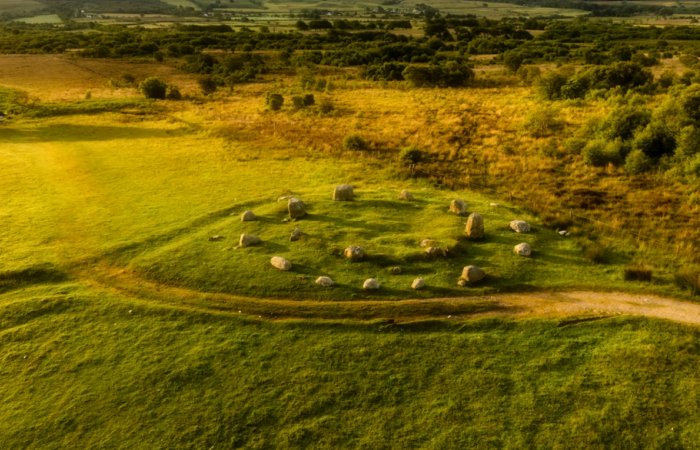
Machrie Moor stone circles. Credit: Historic Environment Scotland
Before the stones stood, intricate timber circles once marked these very spots, hinting at an even older chapter in the moor’s story.
These circles became sacred ground for rituals and ceremonies some 4,500 years ago. Long after their creation, both cremation and inhumation burials found their place within the stones. The six circles rest beneath a striking notch on the northeastern horizon, where Machrie Glen splits into two dramatic valleys. At sunrise on the summer solstice, the sun aligns perfectly with this notch, perhaps revealing the ancient reason for choosing this mystical site.
12 Circular Pit-Like Anomalies
A new report from Historic Environment Scotland (HES) has identified traces of a possible new stone or timber circle at the site, which features a range of archaeological remains including stone circles, standing stones, burial cairns, and cists.
HES archaeologists discovered the new circle below the surface through a geophysical survey. Advanced scanning technology detected anomalies caused by stone, timber, metal, or other subsurface disturbances not visible to the naked eye.
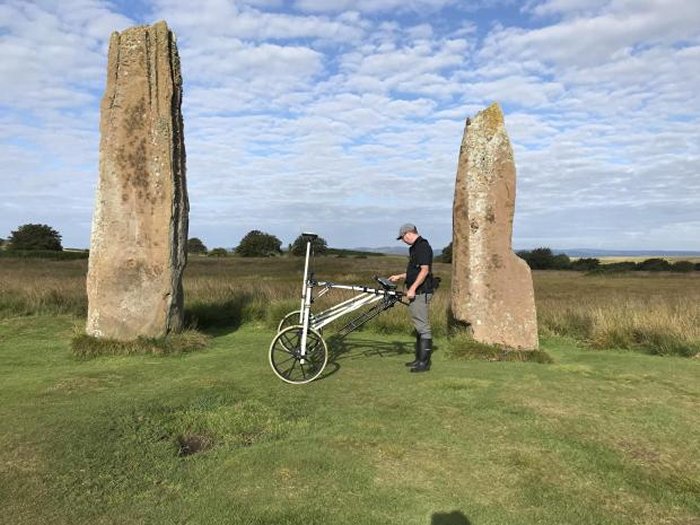
Archaeologists discovered 12 circular pit-like anomalies. Credit: Historic Environment Scotland
Under Dr Nick Hannon’s leadership, the team identified twelve circular pit-like anomalies. When connected, these form a circle with space for two additional settings. As no stones were found in the pits, the circle may have been constructed from either stone or timber posts.
The newly discovered underground circle probably dates to the same time as the other circles that still exist. Neolithic and Bronze Age farmers on Machrie Moor used these circles for rituals and ceremonies. They are lined up with a clear notch at the top of Machrie Glen, where people could see the midsummer sunrise.
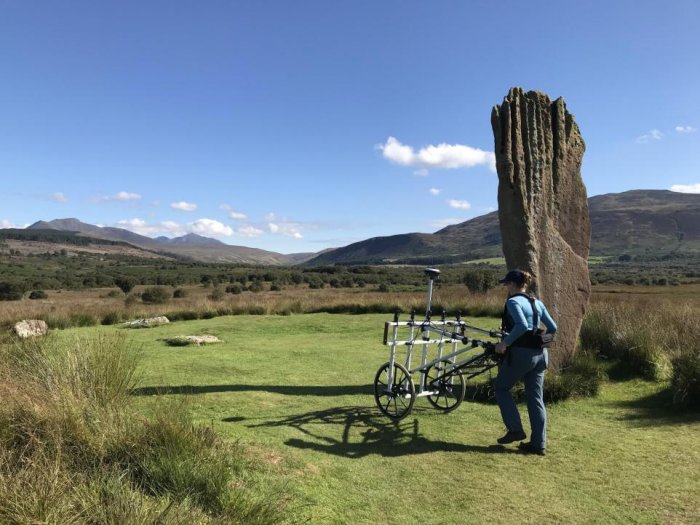
Credit: Historic Environment Scotland
Later on, people used the circles for burials, such as cremations and inhumations, and these may have been for important members of the community. The new circle may have served a similar purpose, but further archaeological research is needed to determine its exact role in Machrie Moor’s history.
“We are tremendously excited about this new discovery. We know that there is a lot of archaeology yet to uncover at Machrie Moor, but the discovery of a new circle completely surpassed our expectations.
See also: More Archaeology News
“The tools we use to learn about what’s underground are constantly developing, and we can learn more and more about our buried history without disturbing the earth and potentially damaging archaeological remains.
Discoveries like this one remind us why we do this work – to look after Scotland’s heritage and uncover more of our past in the process,” Dr Nick Hannon, Senior Heritage Recording Manager at HES, said.
Source: Historic Environment Scotland
Written by Conny Waters – AncientPages.com Staff Writer